East Texas Legacy
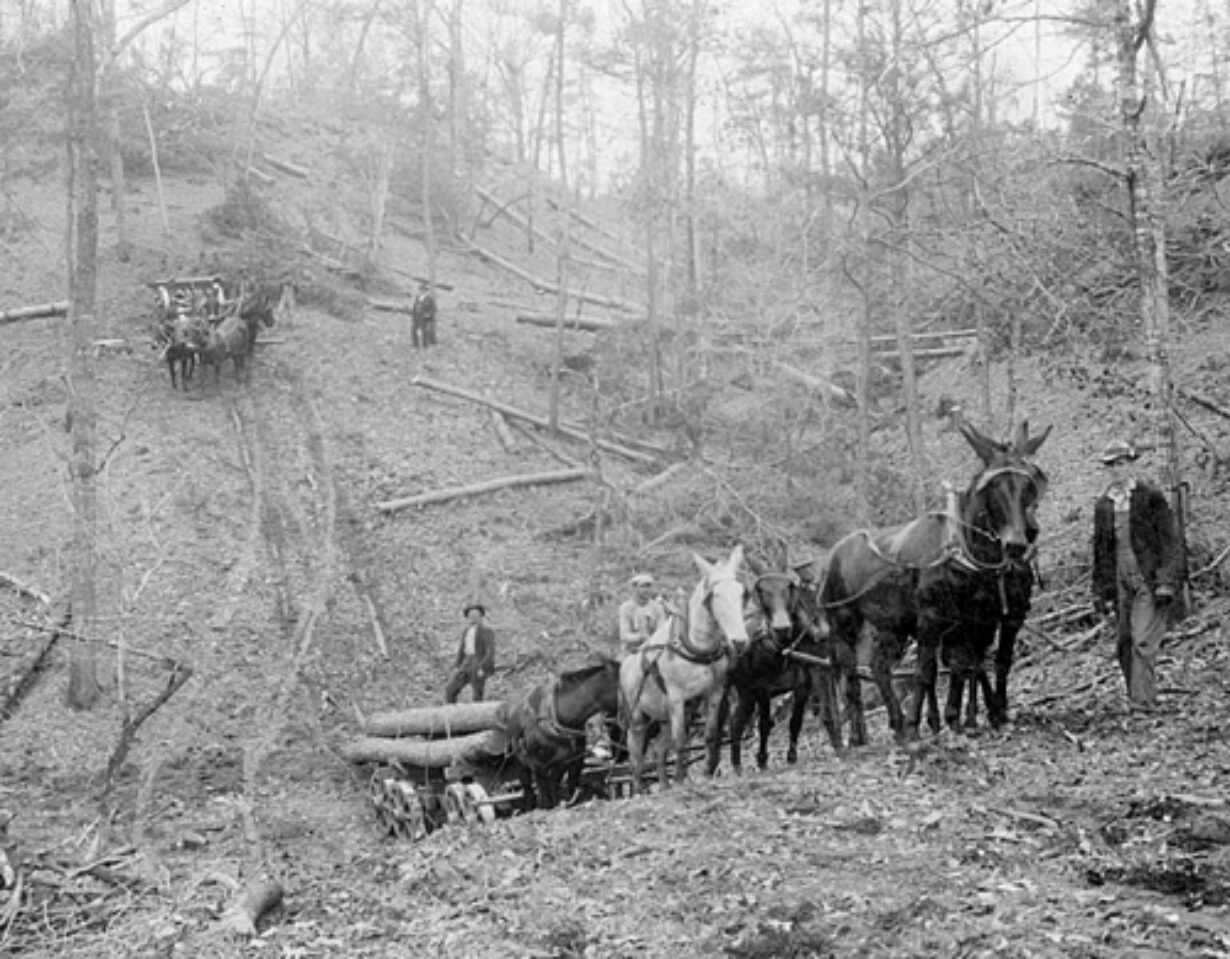
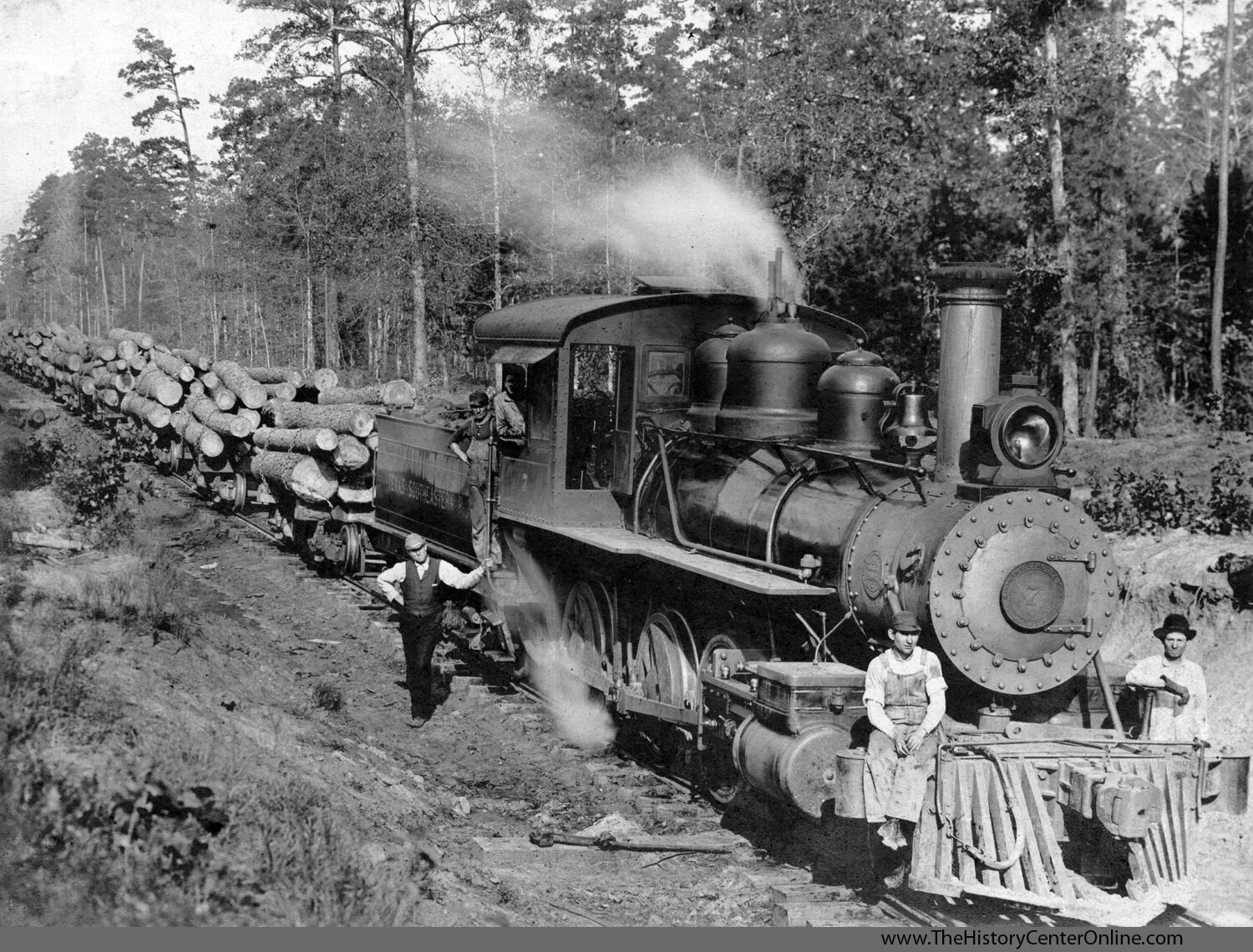
A steam log train loaded with pine logs, 1907
Angelina County, 1846 to now

Land of the Little Angel

Four county seats, a vote against secession, steamboats on the Angelina, schools by the spring, a sawmill empire, and the people who stood up. The best of the 1976 county history, retold in our own words, with the water running through all of it.

A Neches Valley log train bound for Diboll, 1907. American Lumberman Photograph Collection, courtesy of The History Center, Diboll.

The name

Angelina, the little angel

Long before there was a county, there was a young woman of the Hasinai, the Caddo people of these woods, whom the Spanish missionaries called Angelina, “little angel.” The river was named for her, and in 1846 the new county was named for the river.

In 1976, for the nation’s bicentennial, the Angelina County Historical Survey Committee spent two years gathering records, family papers and hundreds of interviews into one book: Land of the Little Angel, edited by Lufkin newspaperman Bob Bowman. It’s still one of the fullest histories of the county. What follows are the stories from it we think everybody here ought to know.

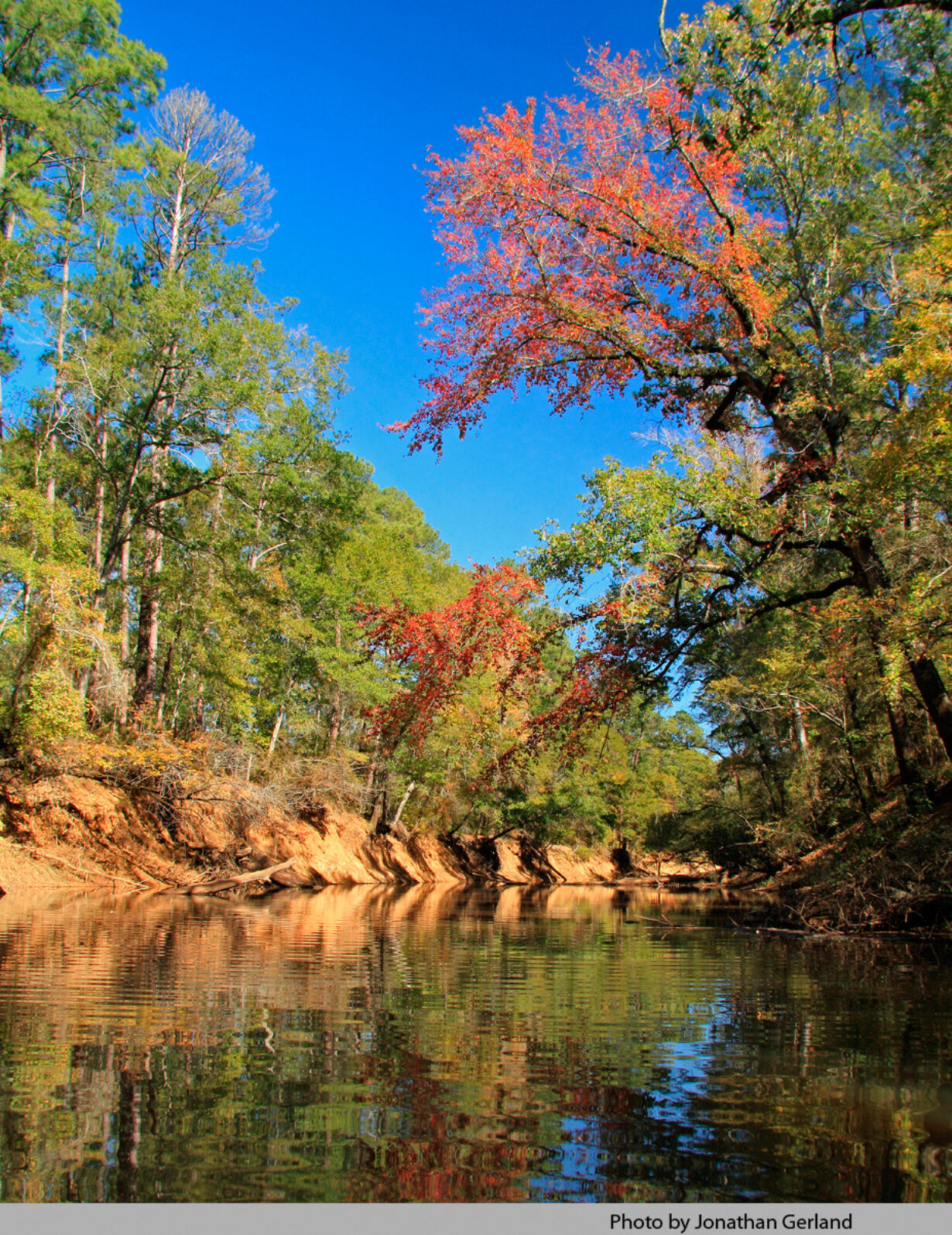
The Angelina River in fall
The Angelina River in fall, 2012. The History Center calls it the home of the Hainai. Courtesy of The History Center, Diboll, Texas.

Before 1846

Salt springs, a mission and a land deed

The land was Hasinai and Bedias country long before it was a county. The county history repeats a legend of a mission founded at Angelina’s own village in July 1717, near the Linwood crossing of the Angelina River, and moved to San Antonio a decade later. In 1797 Bedias land was traded for goods to the Spanish-era trader Vicente Micheli, an early link in the county’s chain of land titles.

Three salt springs

The county history and the 1937 Boon thesis describe three salines: two near Shawnee Creek and one on the Angelina. Salt water rising into shallow ground water was part of this landscape from the start.

Sources: Bob Bowman, ed., Land of the Little Angel: A History of Angelina County, Texas (Lufkin: Lufkin Printing Co., 1976), p. 16; Effie Boon thesis (1937), p. 18.

Water that gushed

An 1882 state report said springs and wells were numerous here. An 1882 visitor wrote that the county’s waters gushed forth in abundance and quality. Artesian wells, 390 to 1,200 feet deep, were in use by about 1920.

Sources: Bob Bowman, ed., Land of the Little Angel: A History of Angelina County, Texas (Lufkin: Lufkin Printing Co., 1976), pp. 22–23, 181; Ch. 2.

The first census

In 1847 the state counted 834 people in the new county, 154 of them enslaved.

Sources: Bob Bowman, ed., Land of the Little Angel: A History of Angelina County, Texas (Lufkin: Lufkin Printing Co., 1976), p. 9.

Certificates that weren’t good

Before Texas independence, the Galveston Bay and Texas Land Company sold land certificates here that weren’t legal, the county’s first outside speculators. Most early settlers held Mexican grants dated 1834–35, under the empresarios Zavala and Vehlein.

Sources: Bob Bowman, ed., Land of the Little Angel: A History of Angelina County, Texas (Lufkin: Lufkin Printing Co., 1976), p. 5.

A grant still on the map

Stephen J. Stanley’s 4,432-acre Mexican land grant, from De Zavala’s colony, still shows on the county’s land maps.

Sources: Bob Bowman, ed., Land of the Little Angel: A History of Angelina County, Texas (Lufkin: Lufkin Printing Co., 1976), p. 303.
1687

La Salle, as legend

The French explorer La Salle was killed by his own men in March 1687 somewhere in East Texas. The county history notes that some people believe he’s buried in Nacogdoches or Angelina County. Nobody knows the spot; a 1930 marker places it near Navasota.

Sources: Bob Bowman, ed., Land of the Little Angel: A History of Angelina County, Texas (Lufkin: Lufkin Printing Co., 1976), pp. 17–18; Texas State Library and Archives; Navasota marker.
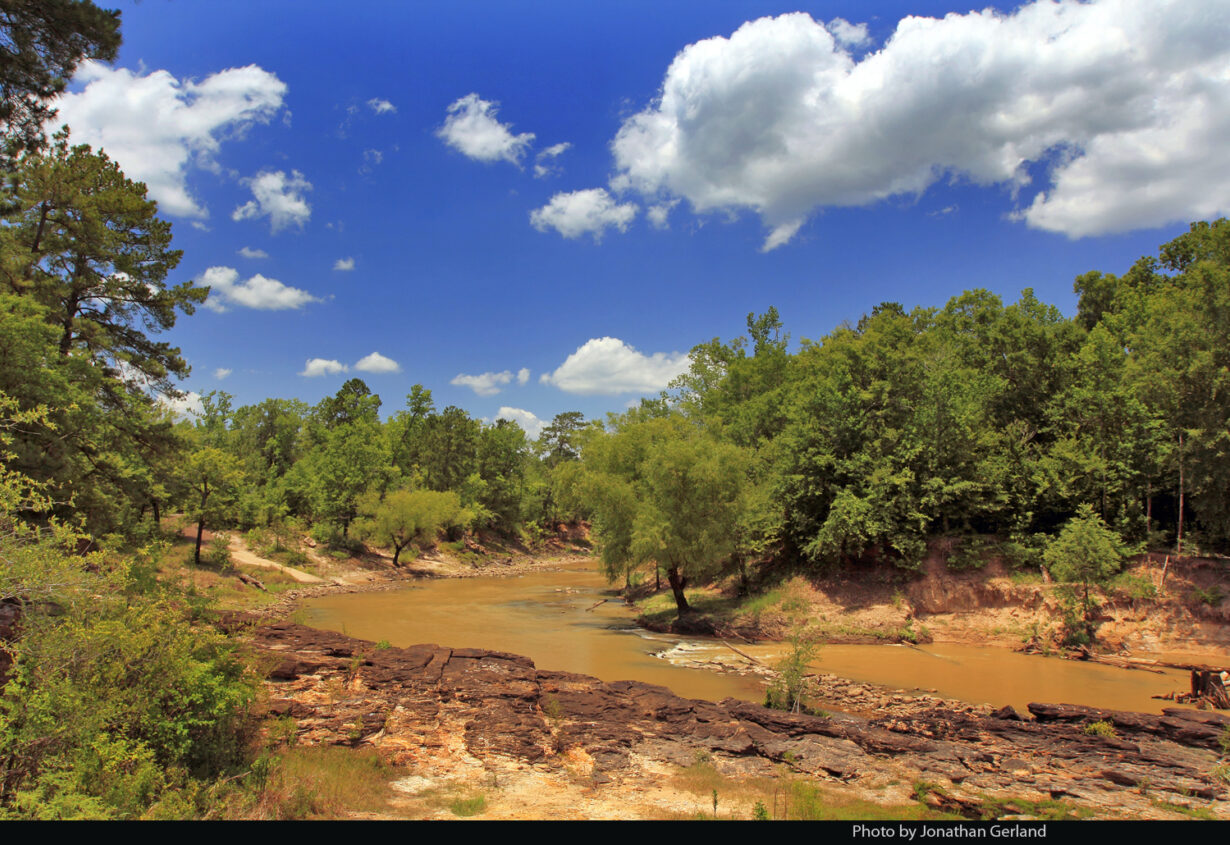
The Neches River at the Fort Terán crossing
The Fort Terán crossing on the Neches River. Courtesy of The History Center, Diboll, Texas.

1846–1892

A courthouse on the move: four county seats

The county’s first election, in July 1846, drew only 139 votes. Its first Commissioners Court met at A. C. Caldwell’s home on Shawnee Prairie with a Mexican blanket thrown over a log for a desk. Then the fight over where the courthouse belonged lasted nearly half a century.

1857

No quorum, no deal

When commissioners tried to move the seat from Jonesville to Homer, Chief Justice Joseph Herrington objected that the law hadn’t been followed: a man who wasn’t a sworn commissioner had acted, and only three commissioners had done business when four were required. He declared their acts void.

Sources: Bob Bowman, ed., Land of the Little Angel: A History of Angelina County, Texas (Lufkin: Lufkin Printing Co., 1976), p. 23.
1858

The recount

Some election returns were destroyed. The first certification gave Jonesville 124 votes to Homer’s 3. A recount from the election judges’ own records two days later gave Homer 221 and Jonesville 130. Homer won. The county clerk reportedly carried the records there on his shoulders.

Sources: Bob Bowman, ed., Land of the Little Angel: A History of Angelina County, Texas (Lufkin: Lufkin Printing Co., 1976), pp. 23–24, 145.
1891

The courthouse fire

Lufkin tried to take the county seat in 1885 and lost, 532 to 247. Then Homer’s courthouse burned. Homer folks blamed Lufkin night riders; nothing was ever proven. The county records survived in two safes, and Homer men guarded them for three days.

Sources: Bob Bowman, ed., Land of the Little Angel: A History of Angelina County, Texas (Lufkin: Lufkin Printing Co., 1976), pp. 24–26.
1892

Lufkin wins

On Jan. 2, 1892, Lufkin won the county seat, 1,076 to 436. Homer claimed Lufkin had brought in railroad hands, traveling salesmen and out-of-towners to vote. Lufkin had argued the land records belonged near the railroad, where land agents could get at them.

Sources: Bob Bowman, ed., Land of the Little Angel: A History of Angelina County, Texas (Lufkin: Lufkin Printing Co., 1976), pp. 26, 153.
1847

Court in the wrong house

On Feb. 1, 1847, lawyer T. J. Jennings of Nacogdoches objected that court was meeting at Isaac Dunagan’s home when the voters had made Marion the seat of justice. Judge Amos Clark agreed and moved all business to Marion. The first lawyer on record in the county won by pointing out that the process was wrong.

Sources: Bob Bowman, ed., Land of the Little Angel: A History of Angelina County, Texas (Lufkin: Lufkin Printing Co., 1976), p. 215.

Lufkin was born at a spring. The railroad reached a crossroads called Denman Springs in 1882, and when Lufkin incorporated in 1890 its city limits were drawn from “the head of Brushy Creek” and Denman Spring. In 1891 the town built its first waterworks, with a standpipe in the middle of Cotton Square. See Our water has a paper trail and Who decides the route.

Sources: Bob Bowman, ed., Land of the Little Angel: A History of Angelina County, Texas (Lufkin: Lufkin Printing Co., 1976), pp. 25, 152–153.

1861

The county that said no

On Feb. 23, 1861, Texans voted on whether to leave the Union. Statewide, secession won with about three of every four votes. Angelina County voted no, 184 to 139. Of the 35 counties historians count as East Texas, it was the only one where a majority voted against secession. In the 1859 governor’s race, the county history says, it had voted for Sam Houston, who opposed secession.

Then, like nearly every county in the South, it sent its men. In September 1861 the county raised Company D of the 7th Texas Cavalry, part of Sibley’s Brigade. About 500 men from the county served.

Dissent had a price. The county history tells of John D. Gann, the county’s first district clerk, who voted against secession but joined the army anyway. Home on furlough, he was dragged out by night riders and hanged; his body was found near Jack Creek, and his grave on his own land has never been found. His log house west of Lufkin, one of the oldest homes in the county, still stands, restored, with a state historical marker.

Sources: Bob Bowman, ed., Land of the Little Angel: A History of Angelina County, Texas (Lufkin: Lufkin Printing Co., 1976), pp. 28, 263, 268; Joe T. Timmons, “The Referendum in Texas on the Ordinance of Secession, February 23, 1861: The Vote,” East Texas Historical Journal 11, no. 2; county returns via VoteArchive; East Texas Historical Journal (only East Texas county to reject secession).

Service

When the county went to war

1917

Company M

In June 1917 Capt. Kit McConnico raised Company M of the 5th Texas Regiment: 159 men at first, 267 by September, from Lufkin, Huntington, Homer, Pollok, Diboll, Burke and more. The county history calls it the largest volunteer company raised in Texas. About 40 county men died in World War I.

Sources: Bob Bowman, ed., Land of the Little Angel: A History of Angelina County, Texas (Lufkin: Lufkin Printing Co., 1976), pp. 31–33.
1917

Four times the quota

About 50 women organized the county Red Cross on June 20, 1917. The county raised four times its quota in four days, and the women packed three meals for each of Company M’s men as they left for Camp Bowie.

Sources: Bob Bowman, ed., Land of the Little Angel: A History of Angelina County, Texas (Lufkin: Lufkin Printing Co., 1976), pp. 94–95.
1941–45

World War II

More than 140 county men died. Families planted victory gardens and women ran the businesses. The Huntington boys who didn’t come home are remembered by McMullen Memorial Library.

Sources: Bob Bowman, ed., Land of the Little Angel: A History of Angelina County, Texas (Lufkin: Lufkin Printing Co., 1976), pp. 33, 111–112.

Korea and Vietnam

The county history counts six county dead in Korea and nearly 15 in Vietnam. Seventeen Spanish-American War veterans had their own camp by 1925.

Sources: Bob Bowman, ed., Land of the Little Angel: A History of Angelina County, Texas (Lufkin: Lufkin Printing Co., 1976), pp. 31, 33.
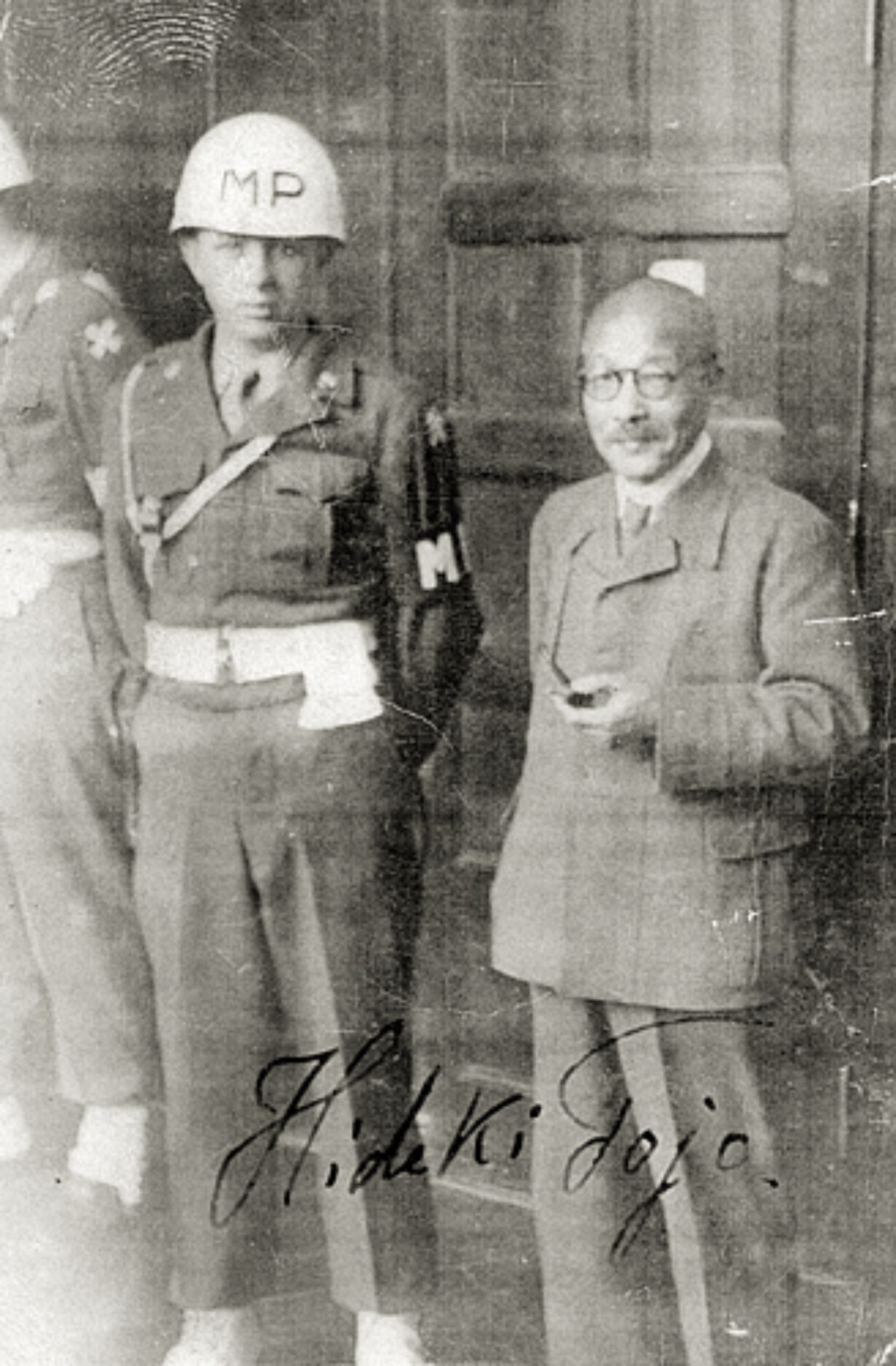
Bill Wesley of Lufkin on guard duty beside Hideki Tojo
Bill Wesley of Lufkin guarding Hideki Tojo, Japan’s wartime prime minister. Courtesy of The History Center, Diboll, Texas.

1840s–1900

Ferries, steamboats and a river that carried cotton

In 1844 Moses and Robert Patton proved the Angelina could carry freight, floating 192 bales of cotton down it on a barge. For the next few decades steamboats like the Laura worked their way up the Neches and the Angelina as far as Marion, hauling cotton to Sabine Pass.

A ferry was a public trust

Every river crossing was licensed by the county. Ferrymen posted a $1,000 to $5,000 bond, paid a yearly tax and charged rates the court set: 10 cents for a man and horse, 5 cents on foot, 50 cents for a four-ox wagon. At high water, rates tripled.

Sources: Bob Bowman, ed., Land of the Little Angel: A History of Angelina County, Texas (Lufkin: Lufkin Printing Co., 1976), p. 132.

Stranded in 1877

In March 1877 the Laura sat stuck in low water for two weeks. They were too far upriver for the Gulf tides to help; only rain could float her.

Sources: Bob Bowman, ed., Land of the Little Angel: A History of Angelina County, Texas (Lufkin: Lufkin Printing Co., 1976), p. 134.

Why the boats stopped

After 1900, river travel died out. The county history lists the reasons: logs from the lumber boom, sandbars, and farmers plowing up the natural springs that fed the river.

Sources: Bob Bowman, ed., Land of the Little Angel: A History of Angelina County, Texas (Lufkin: Lufkin Printing Co., 1976), p. 135.

The county’s own history says it in plain words: when the springs were plowed up, the river lost water. Springs and groundwater keep our creeks and rivers running between rains. That’s why we watch every big well that wants to pump our aquifer. See We’ve watched our water drop before and Good water.

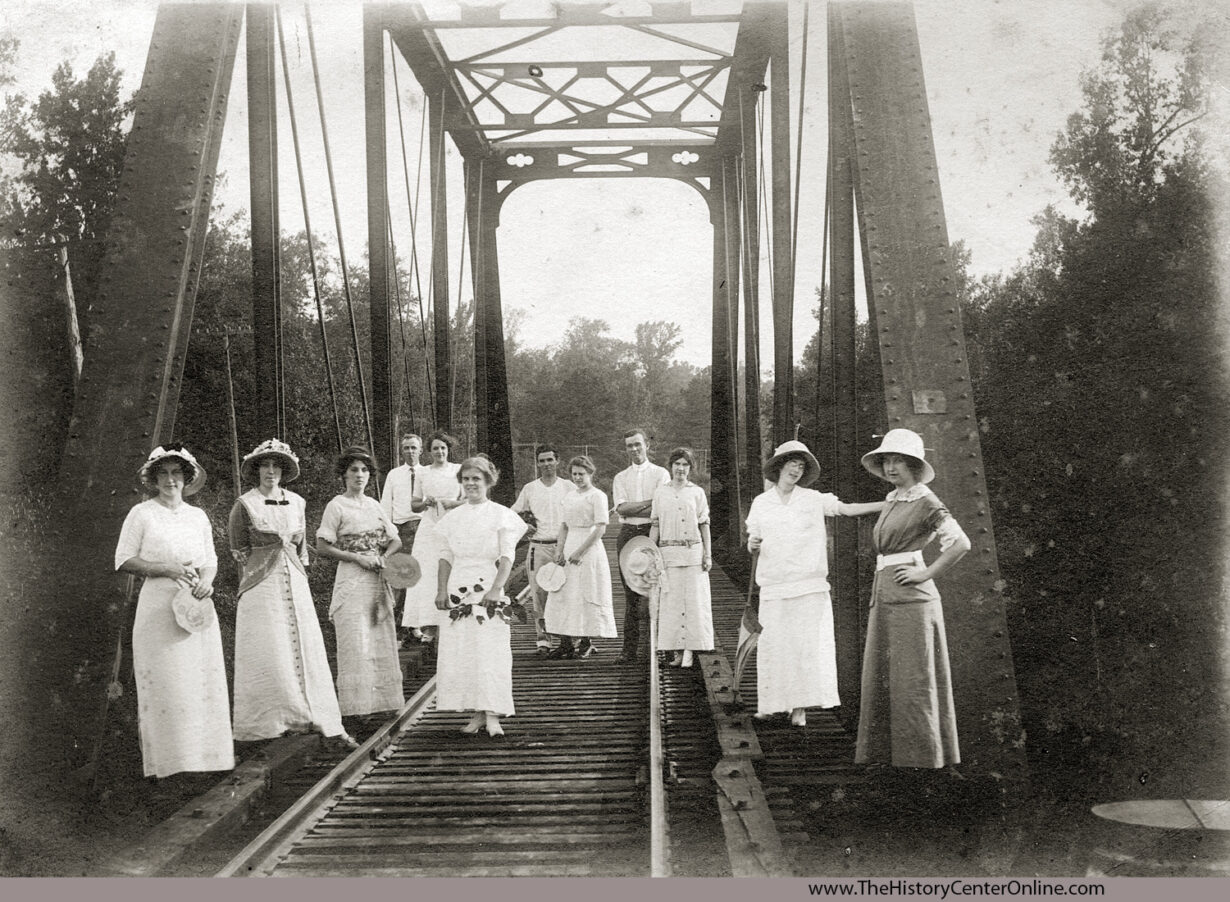
A railroad bridge over the Neches River, about 1910
The Houston East & West Texas Railway bridge over the Neches River, about 1910. That railroad reached Lufkin in 1882. Courtesy of The History Center, Diboll, Texas.

One-room schools

School by the spring

The first schools were log cabins with split-log benches and a mud-and-stick fireplace, girls on one side and boys on the other. Lunch came in a syrup bucket: pork, sweet potatoes, a biscuit and syrup. Every school sent the children to the nearest spring for water, and they drank from a tin cup.

Look at the old school and church names and you’ll see the water: Clear Springs, Sulphur Springs, Harmony Springs, Bayou Springs, Cordaway Springs, Baker Wells. Communities settled where the water was good.

The Republic of Texas set aside four leagues of land, about 17,700 acres, in every county to pay for public schools; Angelina’s were surveyed in 1857. When the school term ran short, families paid tuition to keep the teacher for a last month, and teachers often worked that month for nothing. In 1902 the county had 88 school districts. By 1975 it had six.

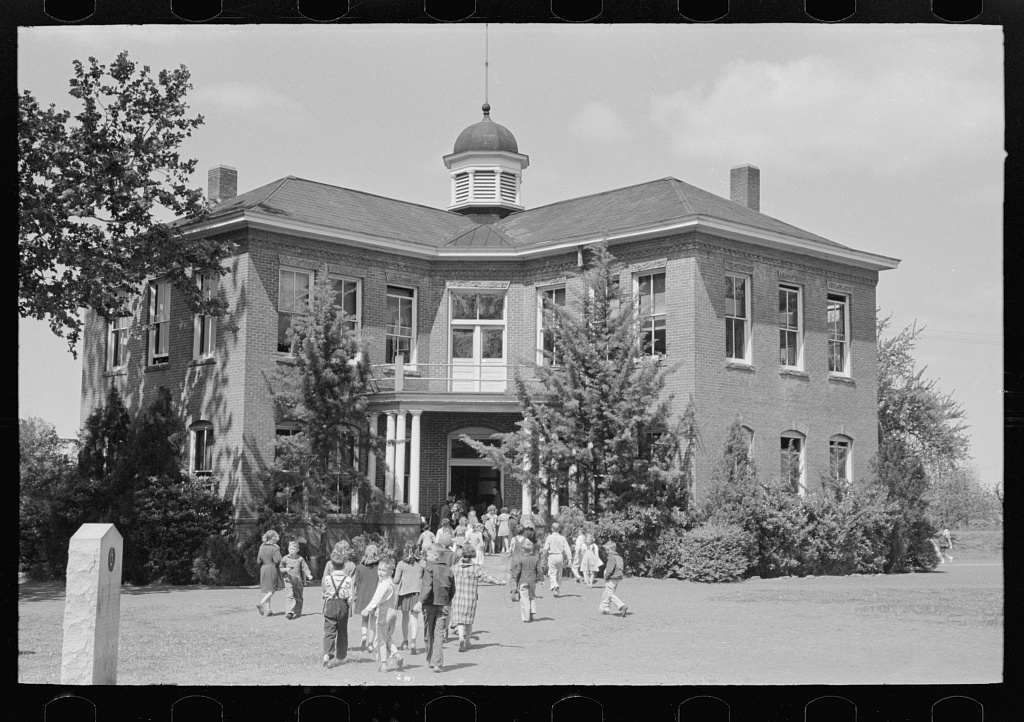
A rural East Texas grade school building, 1939
Grade school, San Augustine, April 1939. Russell Lee, Farm Security Administration. Library of Congress.

Miss Rebecca’s handwriting

Lufkin teacher Rebecca Townsend created a handwriting course used in nearly 40 states. She kept a box of quarters for children without lunch money.

Sources: Bob Bowman, ed., Land of the Little Angel: A History of Angelina County, Texas (Lufkin: Lufkin Printing Co., 1976), pp. 54, 308.

Huntington’s schools

Huntington’s first school opened in 1900 on the site of the Renfro home. A two-story brick school went up in 1914, the first 11th-grade class came in 1921, and from 1939 to 1959 the district was the Huntington Rural Schools, gathering in Oak Flat, Odell, Rocky Hill, Salem, Ora and more.

Sources: Bob Bowman, ed., Land of the Little Angel: A History of Angelina County, Texas (Lufkin: Lufkin Printing Co., 1976), pp. 56–57.Huntington’s story

Bus number one

Concord School had some of the county’s first school buses, built by the Martin Wagon Co. in Lufkin. Concord is under Sam Rayburn Reservoir now.

Sources: Bob Bowman, ed., Land of the Little Angel: A History of Angelina County, Texas (Lufkin: Lufkin Printing Co., 1976), p. 60.
Sources: Bob Bowman, ed., Land of the Little Angel: A History of Angelina County, Texas (Lufkin: Lufkin Printing Co., 1976), pp. 40–58.

Religion in the pines

Brush arbors and a $13.60 bell

Many of the county’s churches started outdoors, under a brush arbor, after a revival. First Baptist Church of Huntington was organized that way in 1901, a week after a revival. Churches, like schools, went where the water was: Ryan Chapel near Burke was set on a hilltop by flowing springs, with water for the horses.

Mrs. Abney’s Sunday school

Mrs. P. C. Abney couldn’t read or write. She taught herself so she could teach the Bible, and in 1878 she started the county’s first Sunday school with her own 12 children and the neighbors’ kids.

Sources: Bob Bowman, ed., Land of the Little Angel: A History of Angelina County, Texas (Lufkin: Lufkin Printing Co., 1976), p. 65.

The catalog bell

Ryan Chapel ordered its bell from Montgomery Ward in 1907 for $13.60. It rang for services, for emergencies and when a grave needed digging.

Sources: Bob Bowman, ed., Land of the Little Angel: A History of Angelina County, Texas (Lufkin: Lufkin Printing Co., 1976), p. 65.

Refused, then restored

In 1895 a visiting Episcopal priest couldn’t find a single house in Lufkin that would take him in and left after sitting under some scrub oaks. The church was built anyway. Decades later, the Lufkin Service League restored old St. Cyprian’s as a historical and arts center.

Sources: Bob Bowman, ed., Land of the Little Angel: A History of Angelina County, Texas (Lufkin: Lufkin Printing Co., 1976), pp. 81–82.

A woman in the pulpit

The Rev. Emma Irick brought the Church of the Nazarene to Lufkin in 1910 and came back in the Depression to pastor it with no set salary.

Sources: Bob Bowman, ed., Land of the Little Angel: A History of Angelina County, Texas (Lufkin: Lufkin Printing Co., 1976), p. 84.

Worship at home

Lufkin’s Jewish families, here since about 1900, never built a temple. They held services in homes, like Harry Abram’s, and Dave Robinson spoke at local churches to build understanding.

Sources: Bob Bowman, ed., Land of the Little Angel: A History of Angelina County, Texas (Lufkin: Lufkin Printing Co., 1976), p. 85.

Church in the courthouse

For about eight years the Church of Christ held its services in the Angelina County courthouse.

Sources: Bob Bowman, ed., Land of the Little Angel: A History of Angelina County, Texas (Lufkin: Lufkin Printing Co., 1976), p. 83.

A mineral spring

Sulphur Springs and the city that never was

South of Zavalla, near today’s FM 1270, three springs of clear, strong-smelling sulphur water flowed by Sandy Creek. Families came by covered wagon and buggy to camp all summer and drink the water. In 1887 George and Henrietta Hawkins moved there hoping the water would cure her, and she recovered. Leading Lufkin families camped there for weeks at a time.

Speculators saw a health resort. In 1892 the tract was surveyed into eight blocks of town lots for a “Sulphur City.” It never happened. Courthouse deeds show the tract was seized by the sheriff in March 1897 and sold at auction at the courthouse door. Later a lumber company camp and a turpentine camp brought people back for a while, and when the camps left, so did the town.

Sulphur Springs is a reminder that our groundwater has a character of its own, and that people have always tried to sell it. The question then and now is who gets to profit from the water under our feet. See the Pineywoods rules and seven big projects.

Sources: Bob Bowman, ed., Land of the Little Angel: A History of Angelina County, Texas (Lufkin: Lufkin Printing Co., 1976), pp. 71–72, 275.

1880s–1930s

The timber kingdom

When the first settlers came, the pines stood more than 100 feet tall and four or five feet across. The county history says plainly that settlers saw the forest as an obstacle and gave no thought to conservation. Then the railroads came, and the big mills.

7,000 → 201,313

Acres, in 15 years

T. L. L. Temple bought about 7,000 acres from J. C. Diboll in the 1890s and started a mill. By 1908 his company held 201,313 acres.

Sources: Bob Bowman, ed., Land of the Little Angel: A History of Angelina County, Texas (Lufkin: Lufkin Printing Co., 1976), pp. 156–159.

The company town

The mill companies built the houses, the church and the school, hired the teacher and ran the waterworks. Workers were paid in company tokens and scrip good only at the company store, which sold everything from cornmeal to caskets.

Sources: Bob Bowman, ed., Land of the Little Angel: A History of Angelina County, Texas (Lufkin: Lufkin Printing Co., 1976), pp. 115, 156–160, 184.

He wouldn’t sell

At Pollok, Henry Claybon refused to sell his land to the mill. Instead he leased it, for 200 pounds of salt pork and four barrels of flour a year, for as long as the mill ran or 99 years.

Sources: Bob Bowman, ed., Land of the Little Angel: A History of Angelina County, Texas (Lufkin: Lufkin Printing Co., 1976), p. 162.

Turpentine

From 1923 to 1931 the McMillan Naval Stores Co. tapped about 23,000 acres of virgin longleaf in the county for turpentine. Black workers did nearly all of the work.

Sources: Bob Bowman, ed., Land of the Little Angel: A History of Angelina County, Texas (Lufkin: Lufkin Printing Co., 1976), p. 185.

Cut out and get out

Very few trees were replanted. When the timber ran out, the mills moved on and left hundreds of ghost towns behind. The cutover land was sold to the federal government for the national forests.

Sources: Bob Bowman, ed., Land of the Little Angel: A History of Angelina County, Texas (Lufkin: Lufkin Printing Co., 1976), pp. 185–188.How the forest came back

The Hoo Hoo Band

Lufkin’s lumbermen had their own brotherhood, the Hoo Hoo, with a black cat for its emblem, and its own brass band.

Sources: Bob Bowman, ed., Land of the Little Angel: A History of Angelina County, Texas (Lufkin: Lufkin Printing Co., 1976), pp. 82, 91, 106, 230, 280.
1893

The World’s Fair pine

The 1893 Chicago World’s Fair used Southern pine for many of its buildings. The county history says that’s what opened the national market for it.

Sources: Bob Bowman, ed., Land of the Little Angel: A History of Angelina County, Texas (Lufkin: Lufkin Printing Co., 1976), p. 182.

The federal law behind our national forests, the 1911 Weeks Act, let the government buy land at the headwaters of navigable streams to protect the water. The Angelina National Forest was bought to protect a watershed. See Our water has a paper trail.

Who held the land

Who owned the woods and the water

The county history doesn’t hide it: a small circle of families owned the mills, the railroads, the bank, the foundry and the paper. Here are the facts it records.

The railroad’s secret route

Folks long told how the railroad skipped Homer because its surveyors got jailed after a rowdy night. SFA historian Robert Maxwell found in the railroad’s own papers that no right-of-way was ever sought at Homer; the route was set on paper years earlier, and the river crossing was bought in 1879.

Sources: Bob Bowman, ed., Land of the Little Angel: A History of Angelina County, Texas (Lufkin: Lufkin Printing Co., 1976), pp. 146–148.

Knowing first

Col. Washington Lafayette Denman learned in the early 1880s where the railroad would run, bought a big tract northwest of Homer, and the line went right through the middle of it. The county history calls it the beginning of Lufkin and the end of Homer.

Sources: Bob Bowman, ed., Land of the Little Angel: A History of Angelina County, Texas (Lufkin: Lufkin Printing Co., 1976), pp. 216–217.

Private woods

Private hunting and fishing clubs held huge tracts of river bottom: the Southern Pine Club, over 30,000 acres; the Pine Island Club, 5,400 acres with membership capped at 42; and the Malibou Club, built by Humble Oil in 1935 for its people.

Sources: Bob Bowman, ed., Land of the Little Angel: A History of Angelina County, Texas (Lufkin: Lufkin Printing Co., 1976), pp. 95–96.

The office where it was decided

The county history says the building that held E. L. Kurth’s offices was where many of the key decisions of Angelina County were made. Kurth’s companies ran sawmills, a paper mill, railroads, banks, hotels, newspapers and radio.

Sources: Bob Bowman, ed., Land of the Little Angel: A History of Angelina County, Texas (Lufkin: Lufkin Printing Co., 1976), pp. 114, 169–170.

Stumps for sale

In the Depression, Southern Pine Lumber sold the federal government 100,000 acres for under $3 an acre. Much of the national forest land had been, in the book’s words, severely cut before the sale.

Sources: Bob Bowman, ed., Land of the Little Angel: A History of Angelina County, Texas (Lufkin: Lufkin Printing Co., 1976), pp. 159, 187.
1917

One of the first city managers

Lufkin adopted the city-manager form in 1917, among the first towns in Texas to do it. The charter commission was chaired by Kester Denman, whose grandfather gave the railroad its right-of-way in 1882.

Sources: Bob Bowman, ed., Land of the Little Angel: A History of Angelina County, Texas (Lufkin: Lufkin Printing Co., 1976), p. 153.

Dreams from outside

Boston investors and the Manton orchard. A French lawyer’s tobacco plantation north of Lufkin, abandoned by 1917. A Chicago group’s plan to settle hundreds of Dutch farm families here, never carried out. A tung oil orchard south of Zavalla that failed.

Sources: Bob Bowman, ed., Land of the Little Angel: A History of Angelina County, Texas (Lufkin: Lufkin Printing Co., 1976), pp. 89–90, 192–193, 196, 222.
1940

Who sets the values

In 1940 Hudson schools went independent so they could raise property values above what the county set and fund their own schools.

Sources: Bob Bowman, ed., Land of the Little Angel: A History of Angelina County, Texas (Lufkin: Lufkin Printing Co., 1976), p. 52.
1935

278,000 acres

When T. L. L. Temple died in 1935, his companies held about 278,000 acres of East Texas timberland. He had started in the 1890s with about 7,000 acres bought from J. C. Diboll.

Sources: Bob Bowman, ed., Land of the Little Angel: A History of Angelina County, Texas (Lufkin: Lufkin Printing Co., 1976), pp. 115–117, 305.

Odum’s Town

The county history says Durant was nicknamed “Odum’s Town” for the power of Louie G. Odum, who was a county commissioner, the sawmill owner and the first postmaster, all at once.

Sources: Bob Bowman, ed., Land of the Little Angel: A History of Angelina County, Texas (Lufkin: Lufkin Printing Co., 1976), p. 176.
1934

The paper and the mill

In 1914 J. H. Kurth Sr. of the Angelina County Lumber Co. became one of three owners of the Lufkin Daily News. In 1932 the paper printed a record 50-page edition promoting the proposed newsprint mill. In 1934 Kurth, W. C. Trout and the Henderson family bought the paper, and on Jan. 14, 1940, it ran a 288-page edition celebrating Southland Paper Mills.

Sources: Bob Bowman, ed., Land of the Little Angel: A History of Angelina County, Texas (Lufkin: Lufkin Printing Co., 1976), pp. 203–208.

Keltys, born Klein

Charles Louis Kelty was born Klein in Alsace and took his mother’s maiden name. He came in 1859 and built the mill at Keltys with his son-in-law. J. H. Kurth Sr. later bought it, and it grew into the Angelina County Lumber Co.

Sources: Bob Bowman, ed., Land of the Little Angel: A History of Angelina County, Texas (Lufkin: Lufkin Printing Co., 1976), pp. 167, 279–280.

From the chamber to the newsroom

W. R. Beaumier went from managing the Chamber of Commerce to running the Lufkin Daily News, from 1943 to 1965.

Sources: Bob Bowman, ed., Land of the Little Angel: A History of Angelina County, Texas (Lufkin: Lufkin Printing Co., 1976), pp. 203–208.
1973

A seat in the House

In 1973 Arthur Temple III of Diboll, of the Temple timber family, followed John Hannah into the Texas House.

Sources: Bob Bowman, ed., Land of the Little Angel: A History of Angelina County, Texas (Lufkin: Lufkin Printing Co., 1976), p. 35.

Graves inside a pump station

At Redland, the county history says, a pioneer family’s graves lie inside the Gulf pump station, and later members of that family worked for the pipeline. Whether the graves are still there, and who can visit them, is worth asking.

Sources: Bob Bowman, ed., Land of the Little Angel: A History of Angelina County, Texas (Lufkin: Lufkin Printing Co., 1976), pp. 170, 255.

The pattern is old: whoever knows first where the railroad, the highway or the pipeline will go decides who prospers. That’s why we file records requests before the deals are done. See Who decides the route and our records requests.

Water on the books

The water districts most people never heard of

The county history lists the public bodies with power over our water as of 1976. Some still exist. Some may be sitting dormant with powers nobody uses.

1935

A river authority

Created in 1935 as the Sabine-Neches Conservation District, cut back to the Neches and Angelina basins in 1949, dormant in the 1960s, revived in the 1970s, with a board appointed by the governor. Today it’s the Angelina & Neches River Authority.

Sources: Bob Bowman, ed., Land of the Little Angel: A History of Angelina County, Texas (Lufkin: Lufkin Printing Co., 1976), p. 193.
1957

WCID No. 2

Commissioners created Angelina County Water Control and Improvement District No. 2 in 1957, covering about 640,000 acres, more than the whole county’s 514,368. Does it still exist, and what can it do? That’s a question for a records request.

Sources: Bob Bowman, ed., Land of the Little Angel: A History of Angelina County, Texas (Lufkin: Lufkin Printing Co., 1976), pp. 181, 193.

Soil and water

Landowners formed the Upper Neches Soil Conservation District after World War II because topsoil was washing off their farms. Cotton fell from 8,000 acres in 1947 to 390 in 1963.

Sources: Bob Bowman, ed., Land of the Little Angel: A History of Angelina County, Texas (Lufkin: Lufkin Printing Co., 1976), p. 193.

A canal on paper

A Deep East Texas Inter-Basin Navigation District was created to study a canal between Sam Rayburn and Toledo Bend. It never got going.

Sources: Bob Bowman, ed., Land of the Little Angel: A History of Angelina County, Texas (Lufkin: Lufkin Printing Co., 1976), p. 193.

Wood treating

A creosote wood-treating plant went up in 1938 on the old Lufkin Land mill site in East Lufkin, another opened nearby in 1946, and Southern Pine opened one at Diboll in 1951. Every old sawmill also had its log pond.

Sources: Bob Bowman, ed., Land of the Little Angel: A History of Angelina County, Texas (Lufkin: Lufkin Printing Co., 1976), pp. 124, 185.

Lignite

The county history noted lignite in the Yegua-Jackson layers and predicted power companies might want it someday.

Sources: Bob Bowman, ed., Land of the Little Angel: A History of Angelina County, Texas (Lufkin: Lufkin Printing Co., 1976), p. 192.
1900

Rain-water soda

In 1900 the Lufkin Steam Bottling Works made its sodas, it said, from pure rain water.

Sources: Bob Bowman, ed., Land of the Little Angel: A History of Angelina County, Texas (Lufkin: Lufkin Printing Co., 1976), p. 126.
1966

Fresh Water Supply District No. 1

The Commissioners Court created Angelina County Fresh Water Supply District No. 1 in 1966, covering about 1,498 acres. It sold $120,000 in bonds in 1970. Another district, formed with Nacogdoches County in 1954, runs Lake Striker.

Sources: Bob Bowman, ed., Land of the Little Angel: A History of Angelina County, Texas (Lufkin: Lufkin Printing Co., 1976), p. 193.

Old industrial ground and forgotten water districts are exactly what we look up when a new project shows up. See seven big projects and where you get a say.

1902–today

From sawmill repair shop to the oil fields of the world

Lufkin Foundry and Machine Co. opened in 1902 to fix sawmill machinery, which until then had to be shipped to St. Louis. W. C. Trout became its manager in 1905. After talks with Humble Oil, the foundry built its first enclosed-gear oil pumping unit in 1923. Trout sketched an adjustable counterbalance crank, the story goes, on a tablecloth; the patent was granted in 1926. By 1971 the company had shipped its 100,000th unit.

Its engineers had patents of their own. One of them, Fred Graham, married a country schoolteacher from Oak Flat. Read his story.

Sources: Bob Bowman, ed., Land of the Little Angel: A History of Angelina County, Texas (Lufkin: Lufkin Printing Co., 1976), pp. 117–122, 309; Google Patents, US 2,048,119.

Before Titusville?

Oil at Tar Spring

Most histories give Lyne Barret of Nacogdoches County credit for the first oil well in Texas, in 1866. The county history makes a claim for one of our own. Citing a 1946 article in the Southwestern Historical Quarterly, it says that shortly before 1859 a man named Jack Graham dug a pit near “Tar Spring” in Angelina County and collected oil from it.

Oil seeps were fairly common here when settlers arrived. They used the oil to grease wagon wheels and harness. The county’s first producing oil well came in near Ewing in 1923.

Oil came to the surface here at springs, rising with the groundwater. Where water moves up, it can move down. That’s one reason we ask hard questions about anything that gets injected, stored or spilled over our aquifer. See where you get a say.

Sources: Bob Bowman, ed., Land of the Little Angel: A History of Angelina County, Texas (Lufkin: Lufkin Printing Co., 1976), pp. 191–192, citing C. A. Warner, Southwestern Historical Quarterly, July 1946.

Gone but not forgotten

Ghost towns of Angelina County

The National Archives records more than 50 post offices in the county. Most of the towns behind them are gone. Some died when the timber ran out, some when the railroad passed them by, and some went under the lake.

MarionThe first county seat, 1846–1854, at Moses Bluff on the Angelina. Steamboats stopped there. Its post office ran from 1847 to 1876.
JonesvilleCounty seat 1854–1858, about three miles southeast of present Huntington. The county just rented a house; no courthouse was ever built. The cemetery remains.
HomerCounty seat 1858–1892, named by Dr. W. W. Manning for Homer, Louisiana. It faded after the railroad passed six miles to the northwest.
CheeselandNorth of Pollok, settled in the 1840s and known for the cheese its Dutch-French families made. Jacob Humphrey’s 1844 stockade still stood in 1976.
AcolThe Angelina County Lumber Co.’s post office was a boxcar on rails. When the logging camp moved, the post office rolled along with it.
MantonBoston investors bought about 12,500 acres of logged-over land east of Lufkin and planted 1,000 acres of peaches, pears and plums in 1902. The orchard failed; by 1914 the dream was gone.
MicheliA sawmill town of about 1,000 on the old Micheli Spanish land grant, one of the few mills to float its logs down the Angelina. Bankrupt by 1906.
OraBetween Huntington and the Angelina River. Its postmaster named it for his baby daughter, Ora Medford, in 1884. She grew up to run Kurth Memorial Library for 29 years.
ConcordFounded around a little plank church in 1860, gone exactly a hundred years later under Sam Rayburn Reservoir. Seven cemeteries were moved.
Bug TussleA one-room log school near Renfro Prairie, on the Emporia logging front. In summer the ticks and gnats swarmed the children.
BodanNear Pollok, named for a Frenchman’s store on the old Smuggler’s Trail. Bodan Cemetery straddles the old road.
Yuno, Krub, Jake, RetrieveJust a few of the more than 50 post offices the National Archives lists for the county. Most are only names now.
Sources: Bob Bowman, ed., Land of the Little Angel: A History of Angelina County, Texas (Lufkin: Lufkin Printing Co., 1976), pp. 21–31, 45–46, 143–180, 221–222, 293.
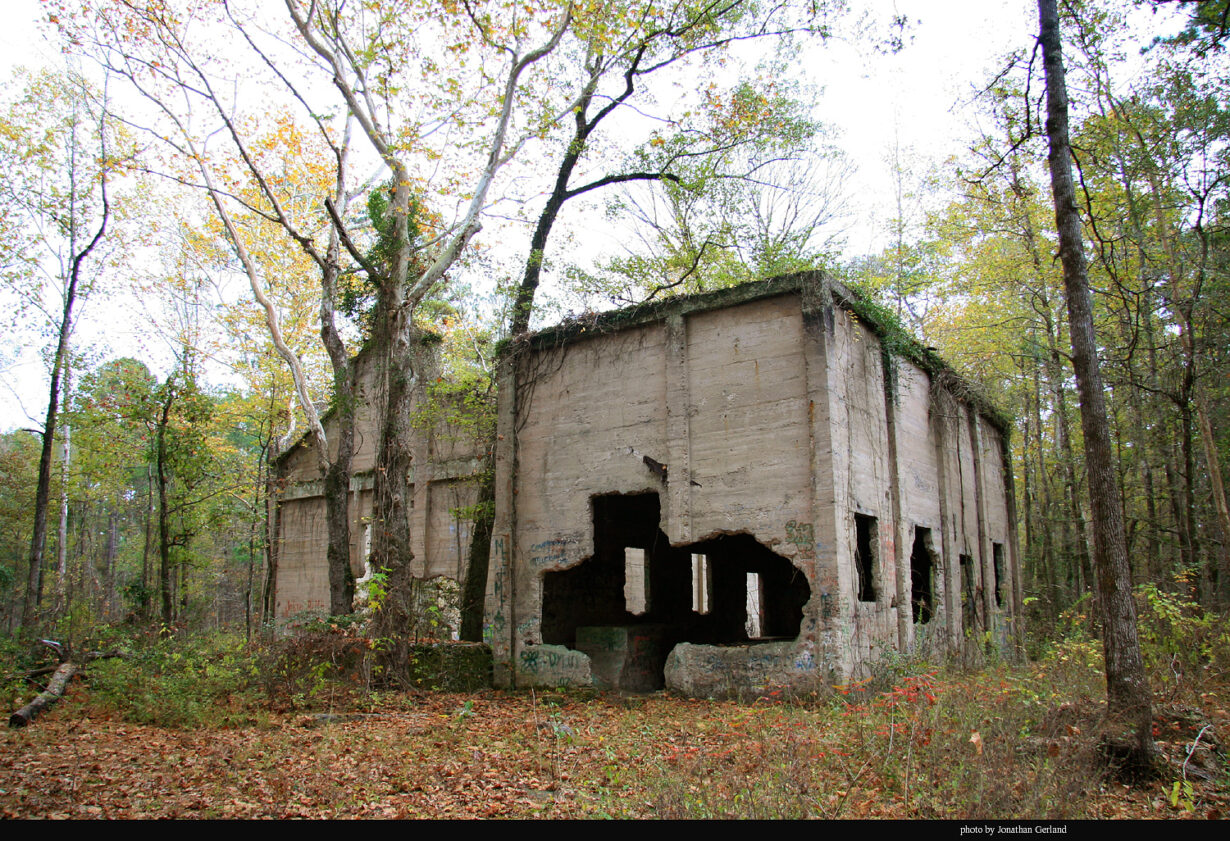
Concrete ruins of the Aldridge Lumber Company mill in the woods
What’s left of the Aldridge Lumber Company mill at Aldridge, a sawmill town that died when the timber ran out. Courtesy of The History Center, Diboll, Texas.

Town life

Festivals, clubs and the corner store

1938

The Texas Forest Festival

Begun in 1938 on the ground where Lufkin High stands now: lumbering contests, forestry exhibits, a two-mile parade and as many as 40,000 visitors.

Sources: Bob Bowman, ed., Land of the Little Angel: A History of Angelina County, Texas (Lufkin: Lufkin Printing Co., 1976), pp. 90–91.

Opera house to picture show

The Lufkin Opera House opened in 1909 and burned in 1920. Movies came in 1913. In 1948 the Dallas Symphony played to 1,200 people.

Sources: Bob Bowman, ed., Land of the Little Angel: A History of Angelina County, Texas (Lufkin: Lufkin Printing Co., 1976), pp. 91–93.

The women’s clubs

The Historical and Literary Club (1909) started Lufkin’s first kindergarten in 1920. The Athenian Forum (1933) debated Darwin, Mussolini and capital punishment. By 1941 there were 21 clubs.

Sources: Bob Bowman, ed., Land of the Little Angel: A History of Angelina County, Texas (Lufkin: Lufkin Printing Co., 1976), pp. 97–101.
1933

A library from a bequest

Kurth Memorial Library was built in 1933 from J. H. Kurth Sr.’s $10,000 gift for the town’s greatest civic need.

Sources: Bob Bowman, ed., Land of the Little Angel: A History of Angelina County, Texas (Lufkin: Lufkin Printing Co., 1976), p. 110.

A bird sanctuary

The Lufkin Garden Club worked five years to make Lufkin a bird sanctuary and won state and national awards for it.

Sources: Bob Bowman, ed., Land of the Little Angel: A History of Angelina County, Texas (Lufkin: Lufkin Printing Co., 1976), p. 102.

Milk for schoolchildren

From 1936 until after World War II the Rotary Anns gave about 10,000 pints of milk a year to underfed children, and teachers reported better grades.

Sources: Bob Bowman, ed., Land of the Little Angel: A History of Angelina County, Texas (Lufkin: Lufkin Printing Co., 1976), p. 100.

Born on the square

Brookshire Brothers opened on the courthouse square in 1921. Perry Brothers grew from a nickel store into a big regional chain. Atkinson Candy began in 1932. Kerr’s, founded at Homer in 1870, was the county’s oldest business.

Sources: Bob Bowman, ed., Land of the Little Angel: A History of Angelina County, Texas (Lufkin: Lufkin Printing Co., 1976), pp. 113, 127–130, 257, 297.

A flying saucer attack

To sell Buddy Poppies, veterans staged a flying saucer attack on Lufkin, dropping paper saucers from a plane.

Sources: Bob Bowman, ed., Land of the Little Angel: A History of Angelina County, Texas (Lufkin: Lufkin Printing Co., 1976), p. 94.

Six-man football

The county history credits Diboll with the first six-man football team in Texas, and Diboll’s T. L. L. Temple Memorial Library was the 1968 Texas Library of the Year.

Sources: Bob Bowman, ed., Land of the Little Angel: A History of Angelina County, Texas (Lufkin: Lufkin Printing Co., 1976), pp. 159–161.
1905

Country doctors

Folks waited until someone was very sick to send for the doctor, who came by horse and buggy. Doctors collected only about three-fourths of their fees, often in eggs, butter and produce. Lufkin’s first hospital opened in 1905–06 under Dr. A. M. Denman, with the county’s first X-ray machine, and the county hospital opened in 1919. Old remedies belong in history books, not medicine cabinets.

Sources: Bob Bowman, ed., Land of the Little Angel: A History of Angelina County, Texas (Lufkin: Lufkin Printing Co., 1976), pp. 211–213.
1949

A hospital the mills built

Memorial Hospital opened in 1949 as a private hospital started by E. L. Kurth Sr., W. C. Trout and Col. C. C. Chambers, and backed by local industry. Gov. Beauford Jester came for the dedication on May 12, 1949.

Sources: Bob Bowman, ed., Land of the Little Angel: A History of Angelina County, Texas (Lufkin: Lufkin Printing Co., 1976), p. 212.
1915

For a dry town

A 1915 photo in the county history shows a temperance rally in downtown Lufkin, with signs asking voters to make it a dry town.

Sources: Bob Bowman, ed., Land of the Little Angel: A History of Angelina County, Texas (Lufkin: Lufkin Printing Co., 1976), p. 177.

The Diboll Millers

The county’s last semi-pro baseball team played into the mid-1950s at Miller Stadium, which Southern Pine Lumber Co. built across U.S. 59.

Sources: Bob Bowman, ed., Land of the Little Angel: A History of Angelina County, Texas (Lufkin: Lufkin Printing Co., 1976), p. 238.
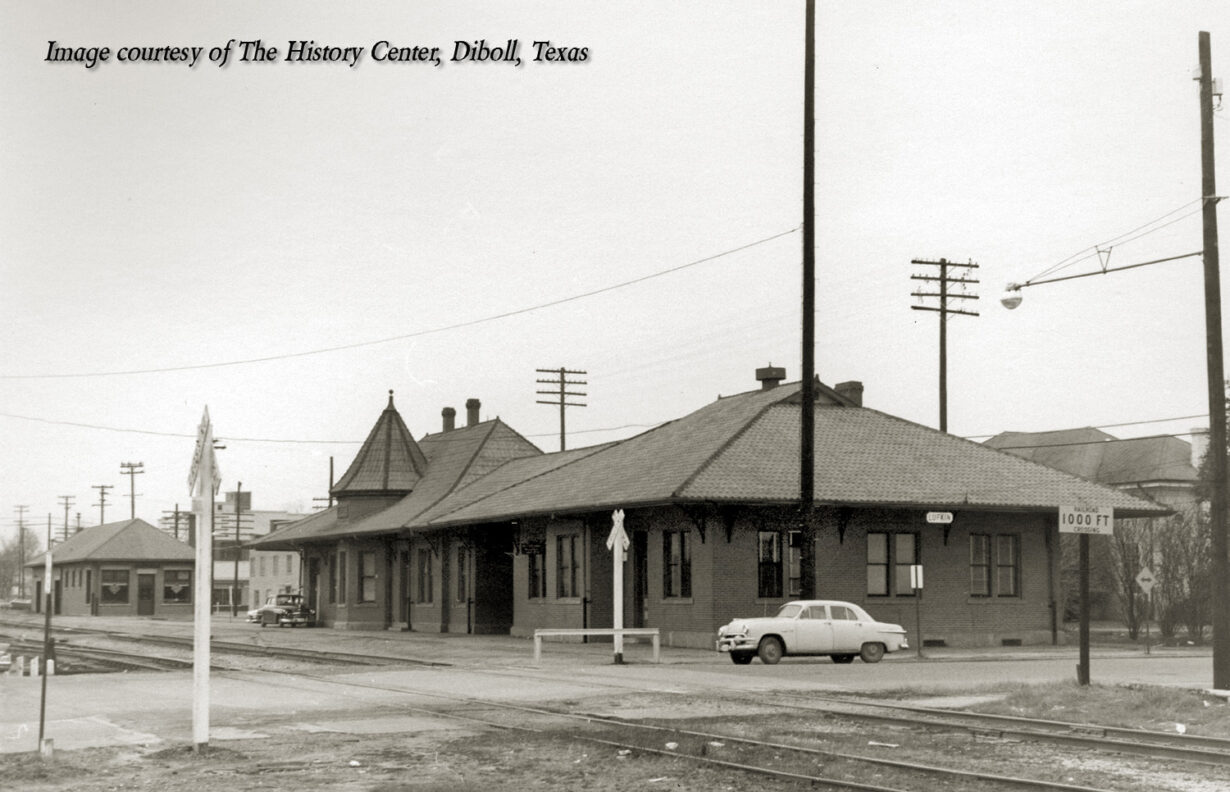
The Southern Pacific passenger depot in Lufkin
Lufkin’s Southern Pacific passenger depot, about 1959. Courtesy of The History Center, Diboll, Texas.

Angelina County’s who’s who

People worth knowing

Zavalla

Cmdr. Arthur Ray Hawkins

Born in Zavalla in 1922, he became one of the Navy’s top aces of World War II, with 14 aerial victories and three Navy Crosses, and later led the Blue Angels. Lufkin aviator A. O. McQueen taught him to fly.

Sources: Bob Bowman, ed., Land of the Little Angel: A History of Angelina County, Texas (Lufkin: Lufkin Printing Co., 1976), pp. 141–142; National Aviation Hall of Fame.
Angelina County

W. D. Gann

Born in the county in 1878, he went from selling newspapers on the train to trading on Wall Street and wrote books on market forecasting that traders still argue about today.

Sources: Bob Bowman, ed., Land of the Little Angel: A History of Angelina County, Texas (Lufkin: Lufkin Printing Co., 1976), p. 270; Wikipedia.
Lufkin

Gov. Allan Shivers

Born in Lufkin on Oct. 5, 1907, he became governor of Texas and chaired the Interstate Oil Compact Commission.

Sources: Bob Bowman, ed., Land of the Little Angel: A History of Angelina County, Texas (Lufkin: Lufkin Printing Co., 1976), pp. 37–38, 317.
Homer

Beulah Watts

Born at Homer in 1873, she took up painting at 40 and left about 1,000 paintings of East Texas pines, shown across the country.

Sources: Bob Bowman, ed., Land of the Little Angel: A History of Angelina County, Texas (Lufkin: Lufkin Printing Co., 1976), p. 310.
Lufkin

Miss Gussie Wilson

In 1900 she bought the Lufkin Leader. The county history calls her Lufkin’s only known woman editor.

Sources: Bob Bowman, ed., Land of the Little Angel: A History of Angelina County, Texas (Lufkin: Lufkin Printing Co., 1976), p. 205.
Huntington

Charlie B. Adams

A woman coached Huntington’s boys to county titles on outdoor courts from about 1918 to 1922.

Sources: Bob Bowman, ed., Land of the Little Angel: A History of Angelina County, Texas (Lufkin: Lufkin Printing Co., 1976), p. 244.
Lufkin

“Aunt Liza”

Maudice Smith, who played Aunt Liza on KTRE radio, won the Texas Story Telling Festival in 1944 and tied for second in the nation in 1946.

Sources: Bob Bowman, ed., Land of the Little Angel: A History of Angelina County, Texas (Lufkin: Lufkin Printing Co., 1976), p. 101.
Angelina County

Rep. John Hannah

One of the reform-minded “Dirty Thirty” legislators in the Sharpstown scandal years, later district attorney, then a lobbyist for Common Cause Texas.

Sources: Bob Bowman, ed., Land of the Little Angel: A History of Angelina County, Texas (Lufkin: Lufkin Printing Co., 1976), pp. 35–37, 217.
Texas Forest Service

The smoke chaser

Knox Ivie was hired in 1928 at $85 a month to watch for fires from a crow’s nest in a tall hickory. A tree cab he built was struck by lightning hours after he finished it, and at night he heard wolves.

Sources: Bob Bowman, ed., Land of the Little Angel: A History of Angelina County, Texas (Lufkin: Lufkin Printing Co., 1976), pp. 189–190.

Ottis E. Lock

Ten years in the Texas House and ten in the Senate, the county’s longest legislative tenure, and an author of the Gilmer-Aikin school laws. He retired as a Southland Paper vice president.

Sources: Bob Bowman, ed., Land of the Little Angel: A History of Angelina County, Texas (Lufkin: Lufkin Printing Co., 1976), pp. 35–36, 284.

Ora Medford McMullen

The baby the town of Ora was named for. She ran Kurth Memorial Library from 1932 to 1961, and its genealogy room bears her name.

Sources: Bob Bowman, ed., Land of the Little Angel: A History of Angelina County, Texas (Lufkin: Lufkin Printing Co., 1976), pp. 86, 293.

Jesse Kellam

Lufkin’s football coach from 1923 to 1930, who named the team the Panthers, later became a close associate of Lyndon Johnson in broadcasting.

Sources: Bob Bowman, ed., Land of the Little Angel: A History of Angelina County, Texas (Lufkin: Lufkin Printing Co., 1976), p. 240.

Homer Garrison Jr.

The Lufkin native who led the Texas Department of Public Safety for decades.

Sources: Bob Bowman, ed., Land of the Little Angel: A History of Angelina County, Texas (Lufkin: Lufkin Printing Co., 1976), p. 38.

Dr. J. E. Peavy Jr.

Lufkin’s own Texas commissioner of health.

Sources: Bob Bowman, ed., Land of the Little Angel: A History of Angelina County, Texas (Lufkin: Lufkin Printing Co., 1976), pp. 38, 295.

Annie Lee Jones

Coached Huntington’s first girls’ basketball team, in 1929–30.

Sources: Bob Bowman, ed., Land of the Little Angel: A History of Angelina County, Texas (Lufkin: Lufkin Printing Co., 1976), p. 245.

J. J. Collins

Born on an Angelina County farm in 1891, he taught in one- and two-room schools and finished law school in a year. He defended more than 100 murder cases, lost fewer than 12, and never had a client sentenced to death.

Sources: Bob Bowman, ed., Land of the Little Angel: A History of Angelina County, Texas (Lufkin: Lufkin Printing Co., 1976), pp. 215–218.

W. J. Townsend Sr.

A Homer lawyer, he wrote the state law making hog theft a felony, organized a bank, helped start the Lufkin school district, served as county judge, and with Eugene Blount developed Huntington.

Sources: Bob Bowman, ed., Land of the Little Angel: A History of Angelina County, Texas (Lufkin: Lufkin Printing Co., 1976), p. 307.

Also from the county: Pete Runnels, two-time American League batting champion, and sportswriter Morris Frank (pp. 231–237). Dunbar High School’s champions are on our Black heritage page.

Gospel or gossip

Tall tales and true stories

The county history admits that some of its favorite stories mix fact, fiction and fancy, and nobody can tell which is which anymore. Enjoy them that way.

1913

The dynamited depot

On a Sunday night in March 1913 the Lufkin depot was blown up. The only man on duty vanished, and bones in the rubble let his family collect insurance. A detective later traced him by his handwriting to California. He was tried and acquitted.

Sources: Bob Bowman, ed., Land of the Little Angel: A History of Angelina County, Texas (Lufkin: Lufkin Printing Co., 1976), pp. 219–220.

The corn rebellion

During Reconstruction, the women of Homer held down a federal corn agent and hauled the stored corn home. Nobody was ever punished.

Sources: Bob Bowman, ed., Land of the Little Angel: A History of Angelina County, Texas (Lufkin: Lufkin Printing Co., 1976), p. 224.

Ottie the mare

She pulled Lufkin’s first ice cream wagon in 1896 and answered the fire alarm on her own. She has a marker near Glendale Cemetery.

Sources: Bob Bowman, ed., Land of the Little Angel: A History of Angelina County, Texas (Lufkin: Lufkin Printing Co., 1976), pp. 225–226.

Hobo

A three-legged dog in 1940s Lufkin, fed by the whole town and patched up by the foundry workers.

Sources: Bob Bowman, ed., Land of the Little Angel: A History of Angelina County, Texas (Lufkin: Lufkin Printing Co., 1976), p. 229.
1938

Wrong Way Corrigan

The famous “wrong way” flier landed in Lufkin in 1938, and about 5,000 people turned out to see him.

Sources: Bob Bowman, ed., Land of the Little Angel: A History of Angelina County, Texas (Lufkin: Lufkin Printing Co., 1976), p. 221.

The dog ate the evidence

In an early hog-theft trial at Marion, a dog ate the evidence, the hog’s ears, during the lunch recess, and the case was dismissed.

Sources: Bob Bowman, ed., Land of the Little Angel: A History of Angelina County, Texas (Lufkin: Lufkin Printing Co., 1976), p. 37.

The champion farkleberry

In 1976 the national champion farkleberry tree stood near Zavalla, 29 feet tall, in the creek country of Sandy, Turpentine, Shawnee and Possum Walk creeks.

Sources: Bob Bowman, ed., Land of the Little Angel: A History of Angelina County, Texas (Lufkin: Lufkin Printing Co., 1976), p. 221.

Get along, little doggies

Turned down for a loan in the Depression, rancher Doc Roach drove his whole herd up to the banker’s window. He got the money.

Sources: Bob Bowman, ed., Land of the Little Angel: A History of Angelina County, Texas (Lufkin: Lufkin Printing Co., 1976), pp. 223–224.
1856

The Moore farm mystery

In August 1856 Abram Moore, his wife Peggy and a child were shot at supper on their Angelina River plantation. Nobody was caught. Legend says he buried gold under a tree guarded by a chained bear. The court fight that followed turned on which of them died last. The land is under Sam Rayburn now.

Sources: Bob Bowman, ed., Land of the Little Angel: A History of Angelina County, Texas (Lufkin: Lufkin Printing Co., 1976), pp. 229–230.

Hogs in the jail

W. M. Glenn won the mayor’s race in 1899 promising to pen the loose hogs, and ended up keeping them in the city jail.

Sources: Bob Bowman, ed., Land of the Little Angel: A History of Angelina County, Texas (Lufkin: Lufkin Printing Co., 1976), pp. 222, 272.

The Antlers Hotel

Southern Pine’s log inn at Diboll did fine until U.S. 59 was rerouted around it. It closed and was burned in 1953 because it couldn’t be torn down.

Sources: Bob Bowman, ed., Land of the Little Angel: A History of Angelina County, Texas (Lufkin: Lufkin Printing Co., 1976), p. 223.

A knight from Lufkin

Leland Thomas Jordan, 32 years with Gulf Oil and 14 in Kuwait, received an honorary British knighthood in 1961.

Sources: Bob Bowman, ed., Land of the Little Angel: A History of Angelina County, Texas (Lufkin: Lufkin Printing Co., 1976), pp. 226–227.

Unlucky thirteens

The Hoo Hoo Band’s 1902 trip to Milwaukee ran into a string of 13s, including two train wrecks.

Sources: Bob Bowman, ed., Land of the Little Angel: A History of Angelina County, Texas (Lufkin: Lufkin Printing Co., 1976), p. 230.
1956

The tree that beat the clock

The new courthouse got a $1,387 clock, and an oak tree hid it. The Lufkin Daily News printed ballots, and the tree won, 693 to 194. It was an election year, and the commissioners honored the vote. Ten years later, at a beautification committee’s urging, officials quietly had the tree trimmed, and nobody protested. By then the clock hadn’t run in a decade. A win that isn’t written down can be undone without a vote.

Sources: Bob Bowman, ed., Land of the Little Angel: A History of Angelina County, Texas (Lufkin: Lufkin Printing Co., 1976), p. 228.

Read the book

Land of the Little Angel: A History of Angelina County, Texas, edited by Bob Bowman for the Angelina County Historical Survey Committee (Lufkin Printing Co., 1976). We retell it in our own words and point you to it; we don’t reprint it. Kurth Memorial Library in Lufkin keeps it, along with the committee’s research files.

Find a mistake, or have a story that belongs here? Write contact@grailsystems.io.