East Texas Legacy
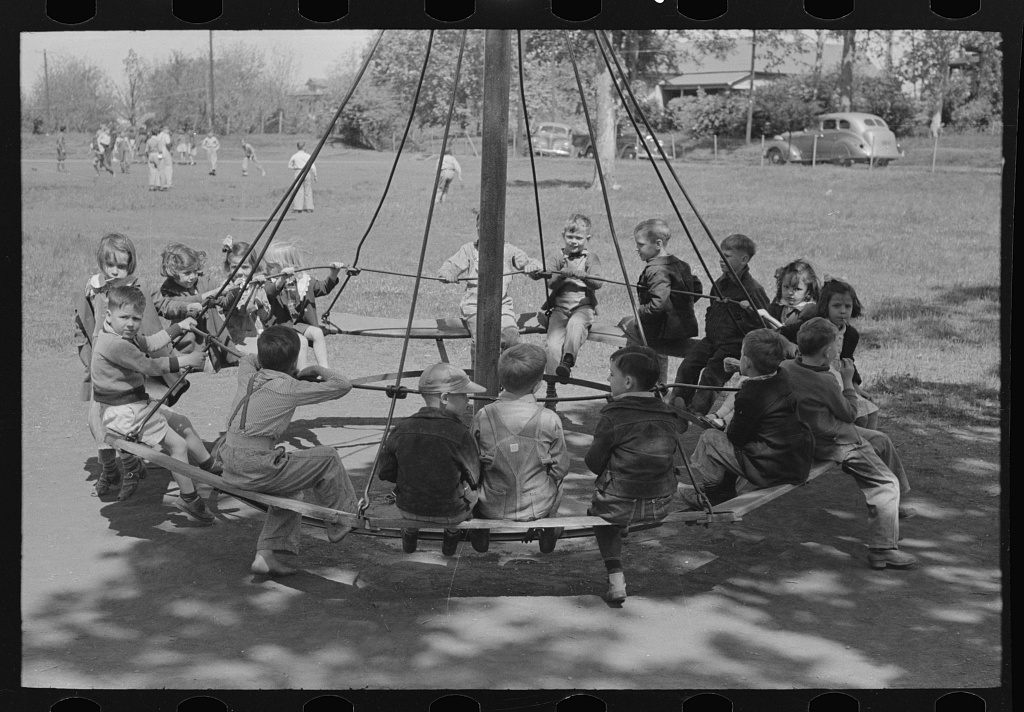
Children riding a homemade circular swing in East Texas, 1938
Folkways of the Piney Woods

How we used to do

Riding the ring, party lines, dog-trot houses, cane syrup boiled in a wash pot, a rose plowed around in the middle of a cornfield. The everyday ways of Deep East Texas, from the families who lived them.

Schoolchildren on a circular swing, San Augustine, 1938. Russell Lee, Farm Security Administration. Library of Congress.

The old tournament

Riding the Ring

Picture a Saturday in the late 1800s. A row of posts stands in a field, each with an iron ring hanging from an arm. A young man comes down the course at a full gallop with a long wooden pole and tries to spear every ring. The one who takes the most rings gets to choose the lady he honors.

East Texans called it Riding the Ring. Texans held these ring tournaments after the Civil War, often with a barbecue and a dance, and they were modeled on the jousting tournaments of the Middle Ages. Winnie Graham’s grandfather, Eli Russell of Oak Flat, won one. Then he gave his prize to a different girl than the one he’d marry, which made Leah jealous.
Say it right

Piney Woods talk

Winnie heard the old Piney Woods speech from a great-grandfather born in 1848 and wrote it down before it disappeared. Some of it you’ll still hear at the feed store. Some of it you won’t hear anywhere anymore.

vittles
Food.
mought
Might.
hope
The old past tense of help.
fellers
Fellows, men, boys.
kids
Baby goats first. Children second.
blinky milk
Milk just starting to turn.
surp
Cane syrup, the kind boiled down at home. Not molasses.
gal’ry
The gallery: the big front porch, the summer living room.
chimlee
Chimney.
fahr
Fire. “Put another back stick on the fahr.”
back stick
The big log laid at the back of the fireplace to throw the heat forward.
wahr
Wire. “Bob wahr” is barbed wire.
play pretties
Toys: cornhusk dolls, paper dolls cut from the Sears catalog.
Blue Norther
A hard, sudden cold front that drops the temperature in an hour.
do like they do across the river
Do without.
ting-a-lings
Tangerines, in one Oak Flat family, after a neighbor’s way of saying it.
saucered and blowed
Hot coffee poured into the saucer and blown on to cool it.
Farture Fumers
Grandpa Eli’s joke name for the Future Farmers.
Sources: Winnie Graham, Under the Blackgum Tree: 165 Years in the Piney Woods (Nacogdoches: Stephen F. Austin State University Press, 2013), pp. 18–20, 71, 84–97, 107, 128, 152–158.

House and home

Dog-trots, gal’ries and the party line

The dog-trot house was the Piney Woods answer to summer: two log rooms under one roof with an open hall down the middle for the breeze (and the dogs) to pass through. Winnie wrote that they once numbered in the thousands in East Texas. The front gal’ry was the summer living room, with a washstand, cane-bottom chairs and a porch swing.

The fireplace

A mud-and-stick “chimlee” and a big back stick to throw the heat into the room. Cooking, warmth and light all came from the same hearth.

Sources: Winnie Graham, Under the Blackgum Tree: 165 Years in the Piney Woods (Nacogdoches: Stephen F. Austin State University Press, 2013), pp. 152–158.

The party line

One wire ran from the Huntington telephone office out to Oak Flat on trees and fence posts. Everybody shared it and every house had its own ring: Grandpa’s was two shorts. There was no ground wire, so you drove your own rod, and when a call got faint somebody hollered to go pour a dipper of water on the ground wahr. Telephones reached Oak Flat about 35 years before electricity did.

Sources: Winnie Graham, Under the Blackgum Tree: 165 Years in the Piney Woods (Nacogdoches: Stephen F. Austin State University Press, 2013), pp. 150–151.

Getting the lights

Electricity didn’t reach Oak Flat until the 1950s. The first family with a refrigerator gave away ice to the neighbors.

Sources: Winnie Graham, Under the Blackgum Tree: 165 Years in the Piney Woods (Nacogdoches: Stephen F. Austin State University Press, 2013), pp. 18–20, 84–97.

The cotton mattress program

During the New Deal, farmers were given needles and free ticking to sew mattresses out of cotton they couldn’t sell. At Oak Flat they made them at the old church house.

Sources: Winnie Graham, Under the Blackgum Tree: 165 Years in the Piney Woods (Nacogdoches: Stephen F. Austin State University Press, 2013), pp. 148–149.

Radio nights

A battery radio, charged at a garage in town. At noon, the local news and the sick list. On Saturday night, the Grand Ole Opry and the Louisiana Hayride, and the Light Crust Doughboys out of Fort Worth.

Sources: Winnie Graham, Under the Blackgum Tree: 165 Years in the Piney Woods (Nacogdoches: Stephen F. Austin State University Press, 2013), pp. 152–158.

Washday

A three-legged cast-iron wash pot over a fire, homemade lye soap and a washboard. The same kind of pot boiled down the cane syrup.

Sources: Winnie Graham, Under the Blackgum Tree: 165 Years in the Piney Woods (Nacogdoches: Stephen F. Austin State University Press, 2013), pp. 87–88, 98.

Field and woods

Open range, ox teams and martin houses

Until about the 1950s much of these woods was open range. Hogs ran loose and fattened on mast, the acorns and nuts on the forest floor, and every family registered its own earmark, a pattern of notches cut in the ear, so they could tell whose hog was whose. Folks picked wild berries for jelly and cobbler and robbed wild bee trees for honey.

Driving oxen

A team had a near ox and an off ox. “Whoa, come ‘ere” turned them left. “Yea, back” turned them right. Timber wagons ran with up to four pairs. Winnie said the old plows stayed in use until after World War II.

Sources: Winnie Graham, Under the Blackgum Tree: 165 Years in the Piney Woods (Nacogdoches: Stephen F. Austin State University Press, 2013), pp. 18–20, 71–72.

Hog killing

It waited for the first frosty morning. The meat was smoked over hickory and some of it canned. Sweet potatoes went into the potato house for the winter.

Sources: Winnie Graham, Under the Blackgum Tree: 165 Years in the Piney Woods (Nacogdoches: Stephen F. Austin State University Press, 2013), pp. 84–97.

Purple martins

Most farmsteads had a martin house up on a tall pole. Grandpa Eli built them twelve rooms at a time. The martins ate flying insects.

Sources: Winnie Graham, Under the Blackgum Tree: 165 Years in the Piney Woods (Nacogdoches: Stephen F. Austin State University Press, 2013), p. 169.

Contour rows

County agricultural agents helped farmers lay their fields out in contours and terraces to keep the soil and the rain from washing away. Grandpa grew watermelons on his.

Sources: Winnie Graham, Under the Blackgum Tree: 165 Years in the Piney Woods (Nacogdoches: Stephen F. Austin State University Press, 2013), p. 164.

A calf for college

An old custom: name a calf or a pig as one child’s own, and when it sold, the money went to that child’s needs. Winnie thought that’s how her mother got to college.

Sources: Winnie Graham, Under the Blackgum Tree: 165 Years in the Piney Woods (Nacogdoches: Stephen F. Austin State University Press, 2013), pp. 98–107.

Picking cotton

Cotton was king here until about World War II, then cattle. Pickers were paid a few cents a pound, and a hundred pounds was a good day.

Sources: Winnie Graham, Under the Blackgum Tree: 165 Years in the Piney Woods (Nacogdoches: Stephen F. Austin State University Press, 2013), pp. 9–11, 98–107.

Those contour rows were water conservation. After World War II, the county’s landowners organized a soil conservation district because, in the county history’s words, the topsoil was washing off their farms. Caring for the land and the water has always been part of farming here. See Our water has a paper trail.

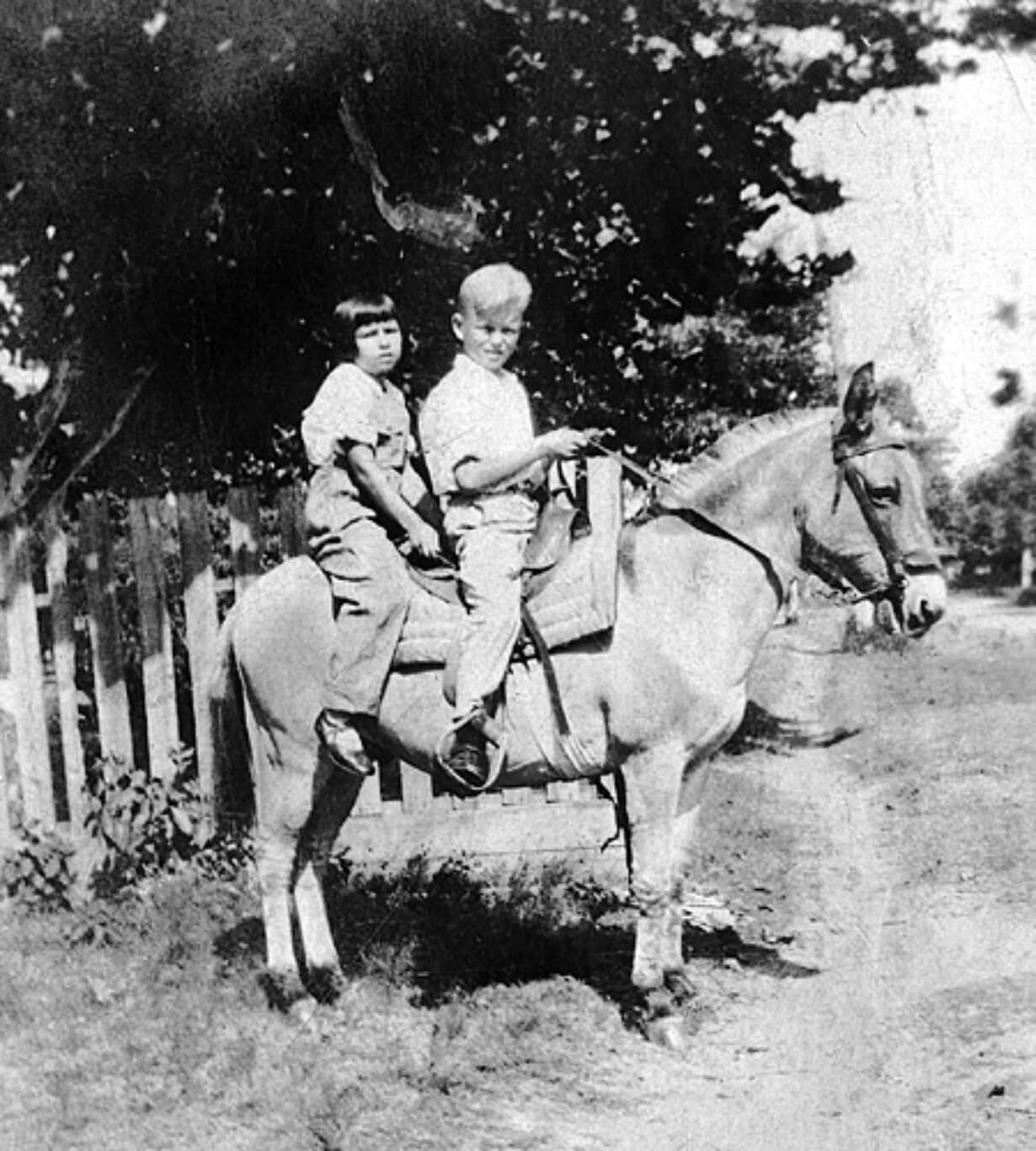
Two children riding a mule named Baalam
Pauline Durham and Elmer Ray Wells on Baalam the mule at Fastrill, about 1928. Courtesy of The History Center, Diboll, Texas.

The kitchen

Cornbread every day, light bread on Sunday

Cornbread was the daily bread, and it had better be brown on top. Store-bought wheat “light bread” was an extravagance, and flour mostly went into breakfast biscuits. Dinner was at noon; supper was whatever was left, cold. Buttermilk was the everyday drink, and if company asked for sweet milk, they asked politely.

Mayhaws in a skiff

Mayhaws grow in the soggy creek and river bottoms. In a good mayhaw year the bottoms flooded, the ripe fruit fell and floated, and a few folks rowed skiffs into the swamp to scoop it up and sell it. It makes the finest jelly there is.

Sources: Winnie Graham, Under the Blackgum Tree: 165 Years in the Piney Woods (Nacogdoches: Stephen F. Austin State University Press, 2013), pp. 88–89.Mayhaw jelly recipe

Surp, not molasses

Families pressed their own cane in hand-turned mills and boiled the juice down in iron wash pots. That was syrup. Molasses was what the big sugar mills left over. Syrup and biscuits were supposed to come out even.

Sources: Winnie Graham, Under the Blackgum Tree: 165 Years in the Piney Woods (Nacogdoches: Stephen F. Austin State University Press, 2013), pp. 87–88.

Bitter milk

When the cows got into bitterweed, the milk and butter turned so bitter the cats wouldn’t touch it. You could taste the pasture in the churn.

Sources: Winnie Graham, Under the Blackgum Tree: 165 Years in the Piney Woods (Nacogdoches: Stephen F. Austin State University Press, 2013), p. 88.

Wild berries

Blackberries, dewberries, the rare huckleberry, and muscadines so tart they puckered your mouth but made a fine jelly. Pawpaws, and wild strawberries no bigger than a pea.

Sources: Winnie Graham, Under the Blackgum Tree: 165 Years in the Piney Woods (Nacogdoches: Stephen F. Austin State University Press, 2013), pp. 88–89, 143–144.Our wild foods guide

Coffee

Boiled, then saucered and blowed. In the Civil War, when there wasn’t any, folks parched sweet potatoes, beans and corn and ground them for a stand-in.

Sources: Winnie Graham, Under the Blackgum Tree: 165 Years in the Piney Woods (Nacogdoches: Stephen F. Austin State University Press, 2013), pp. 84–97; Bob Bowman, ed., Land of the Little Angel: A History of Angelina County, Texas (Lufkin: Lufkin Printing Co., 1976), p. 30.

Summer treats

Banana pudding with real custard and vanilla wafers. Watermelons kept cool under the bed. Peanuts curing in the back room, and children sneaking raw goobers out of the pile.

Sources: Winnie Graham, Under the Blackgum Tree: 165 Years in the Piney Woods (Nacogdoches: Stephen F. Austin State University Press, 2013), pp. 152–158.

Through the year

Roasting ears and creamed corn, black-eyed peas or butterbeans with a piece of pork, okra, creek perch rolled in cornmeal and fried, a rooster penned and fed grain before Sunday dinner, winter greens, and Irish potatoes planted in late winter. School lunch went in a syrup bucket.

Sources: Winnie Graham, Under the Blackgum Tree: 165 Years in the Piney Woods (Nacogdoches: Stephen F. Austin State University Press, 2013), pp. 84–97; Bob Bowman, ed., Land of the Little Angel: A History of Angelina County, Texas (Lufkin: Lufkin Printing Co., 1976), p. 41.

Sweet gum gum

Children chewed the sap of the sweet gum tree like chewing gum. Winnie said it tasted good and left a gooey mess on your teeth.

Sources: Winnie Graham, Listening to Plants: A Pathway to New Uses (2020), p. 7.

Singing

Shape notes, play parties and the fiddle

Country churches sang out of shape-note hymnals, where each note of the scale has its own shape so a congregation could read music without lessons. It’s an American way of teaching singing that goes back to about 1800. Grandma Leah’s was the 1947 Pentecostal Praise Hymnal, and it cost 65 cents.

Instead of dances, young people had play parties: singing games like “Skip to My Lou” and “Pickin’ Up Paw-Paws.” The fiddle still got played. At Oak Flat, Uncle Jack’s “Sally Goodin” carried to the far end of the cornfield.

Sources: Winnie Graham, Under the Blackgum Tree: 165 Years in the Piney Woods (Nacogdoches: Stephen F. Austin State University Press, 2013), pp. 138–151.

Signs and sayings

What the old folks knew

Old house places

You can still find abandoned homesteads deep in the woods by the patches of jonquils and the scraggly rose bushes somebody planted by the door.

Sources: Winnie Graham, Under the Blackgum Tree: 165 Years in the Piney Woods (Nacogdoches: Stephen F. Austin State University Press, 2013), p. 165.

Planting peas

Plant your black-eyed peas when the fishermen start sitting down on the creek bank, about April.

Sources: Winnie Graham, Under the Blackgum Tree: 165 Years in the Piney Woods (Nacogdoches: Stephen F. Austin State University Press, 2013), pp. 164–177.

Catalpa worms

The caterpillars that strip a catalpa tree, the “catawba worms,” made the best fish bait going.

Sources: Winnie Graham, Under the Blackgum Tree: 165 Years in the Piney Woods (Nacogdoches: Stephen F. Austin State University Press, 2013), p. 175.

Christmas green

Country folks hung a sprig of yaupon, with its red winter berries, for Christmas. Look, don’t eat: the berries will make you sick.

Sources: Winnie Graham, Under the Blackgum Tree: 165 Years in the Piney Woods (Nacogdoches: Stephen F. Austin State University Press, 2013), p. 137.

Rain crows and whip-poor-wills

The “rain crow,” the yellow-billed cuckoo, called before a rain, and the whip-poor-will’s call meant spring had come.

Sources: Bob Bowman, ed., Land of the Little Angel: A History of Angelina County, Texas (Lufkin: Lufkin Printing Co., 1976), pp. 19–20.

Please read

A word on safety

This page is history, not instructions. The old families doctored with whatever they had, and some of it was dangerous. We don’t share home remedies. If you put up food, follow the current USDA home canning guidance: low-acid foods like peas, beans and meat need a pressure canner. Never eat a wild plant you can’t identify for certain. Poison help: 1-800-222-1222.