Food that comes out of these woods, creeks and gardens, the way it’s been made here for generations. Our members’ family recipes are coming next, starting with our founder’s.
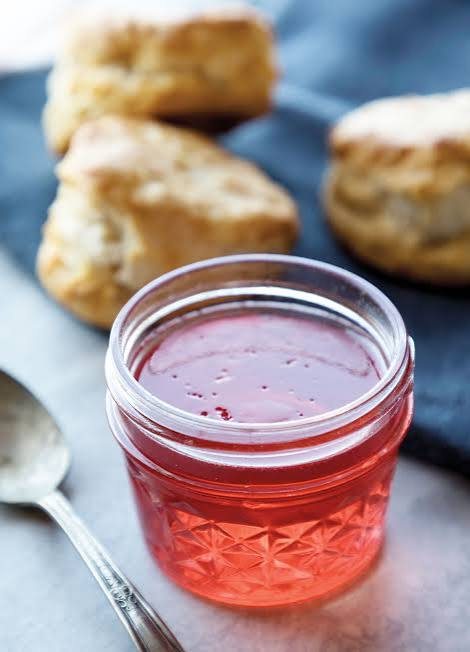
Mayhaw jelly
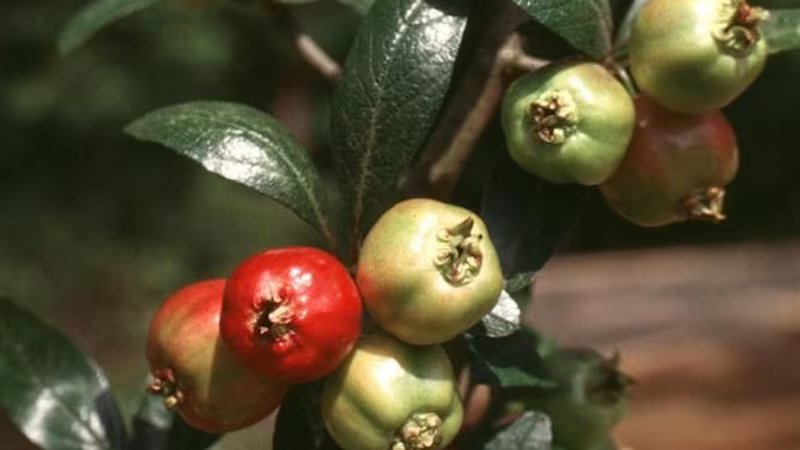
Mayhaws ripening on the branch.
If there’s one taste that belongs to Deep East Texas, it’s this one. Mayhaws are small, tart, apple-like fruit from a thorny hawthorn that grows in wet bottomland along our creeks and rivers. In Texas they only grow north and east of the Trinity River. They bloom white in late winter and drop ripe fruit in spring, often right into the water, where folks scoop them up with sieves.
JFMAMJJASOND
Light pink: blooming. Red: picking season.
Right here in Huntington, Wynn and Pam Havard’s Jellytree Mayhaw Farm makes it the old way: mayhaws, sugar and pectin, cooked in small batches. Pam’s advice is to freeze the berries until you’re ready. She thinks jelly from frozen mayhaws turns out better.
To make it safely, use a tested canning recipe. The National Center for Home Food Preservation publishes one for mayhaw jelly with pectin, with exact ratios and processing times. Canning is one place where you follow the tested recipe to the letter.
I learned to make mayhaw jelly with my grandmother, Pat Griffin. I called her Mamie. It was the absolute best.
Mornings in her kitchen started with fresh sweet tea in her white glass pitcher with the little blue flowers on it. She’d cover it with a kitchen towel while it was still steaming hot, and we’d drink on it all day before making a new batch for supper.
She and her mother, my great-grandmother Audrey Faye Jones, my Granny, were the finest two cooks in all of East Texas. Homemade spaghetti. Corned beef we cured ourselves, from our own cows. The best steak you ever ate. Somebody else owns that house now, and I often wonder if they know the legacy of the women whose kitchen they’re standing in.
Recipes from our founder’s grandmother, Pat Griffin, as her granddaughter remembers them. Mamie cooked by eye, so where she didn’t measure, neither do we. We added starting amounts for folks who never got to watch her.
Mamie’s homemade spaghetti
Pat Griffin’s recipe
Man oh man, it was so good. Still is.
You’ll need
A couple pounds of ground beef
Green bell pepper, minced
Yellow onion, minced
A couple cloves of garlic, minced
Lots of garlic powder
Italian seasoning
Oregano
Bay leaf
Parsley
Salt and pepper
Petite diced tomatoes
Tomato paste
Tomato sauce, if it needs it
A little sugar
Spaghetti noodles
How Mamie did it
Fry the ground beef, bell pepper, onion and garlic all together in a big pot.
While it cooks, season it: lots of garlic powder, plus Italian seasoning, oregano, a bay leaf, parsley, salt and pepper.
Add the petite diced tomatoes and tomato paste. If it needs it, add a little tomato sauce. Stir in some sugar.
Let it simmer while you boil the noodles. Pull the bay leaf before serving.
Starting amounts if you never watched her (our suggestion, not Mamie’s): 2 pounds beef, 1 bell pepper, 1 onion, 2 or 3 cloves garlic, 2 teaspoons garlic powder and up, 1 tablespoon Italian seasoning, 1 teaspoon oregano, 1 bay leaf, 2 cans (14.5 ounces) petite diced tomatoes, 1 can (6 ounces) tomato paste, about 1 tablespoon sugar, 1 pound spaghetti. Simmer at least 30 minutes.
Garlic Texas toast
Goes with Mamie’s spaghetti
You’ll need
A loaf of Sunbeam Texas-size bread
Butter
Garlic salt
How to
Spread butter on the slices.
Sprinkle with garlic salt.
Bake a few minutes, until it’s golden.
Our suggestion if you need a number: 400°F for 5 to 8 minutes. Watch it close.
Mamie’s sweet tea
Pat Griffin’s recipe
Lipton, brewed the old-fashioned way, 6 to 8 glasses at a time. You either got it or you don’t.
You’ll need
Lipton tea bags
Water
A quarter to a half cup of sugar
Ice
A glass pitcher and a kitchen towel
How Mamie did it
Brew the tea hot, the old-fashioned way.
Pour in the sugar while it’s hot, a quarter to a half cup.
Pour it into the pitcher and cover it with a kitchen towel while it’s still steaming.
Serve it hot, poured over ice.
Never saved for later. Whatever’s left goes down the sink, and you make a fresh batch for supper.
Starting amounts if you never watched her (our suggestion, not Mamie’s): about 6 regular Lipton bags steeped 5 minutes in a quart of just-boiled water, then topped up to a 2-quart pitcher.
Cast-iron skillet cornbread
One 10-inch skillet, about 8 wedges
The bread that goes under, beside or into most of what’s on this page. Get the skillet screaming hot first. That’s where the crust comes from.
You’ll need
2 tablespoons bacon grease or butter
1½ cups yellow cornmeal
½ cup all-purpose flour
1 tablespoon baking powder
½ teaspoon baking soda
1 teaspoon salt
1½ cups buttermilk
2 eggs
¼ cup melted butter
How to
Put the grease in a 10-inch cast-iron skillet and set it in the oven while it heats to 450°F.
Whisk the cornmeal, flour, baking powder, baking soda and salt in a bowl.
In another bowl, whisk the buttermilk, eggs and melted butter. Stir into the dry mix just until it comes together.
Pull the hot skillet out, swirl the grease up the sides, and pour in the batter. It should sizzle.
Bake 20 to 25 minutes, until the top is golden and a toothpick comes out clean. Turn it out onto a board and cut into wedges.
Sugar or no sugar is a family argument we’re staying out of. Add up to 2 tablespoons to the dry mix if that’s how your grandmother did it.
Cornmeal-fried catfish
Serves 4
Friday-night fish fry food. Cornmeal, not flour, and hot oil, not warm oil.
You’ll need
2 pounds catfish fillets, cut into strips
1 cup buttermilk
1 cup fine yellow cornmeal
¼ cup all-purpose flour
2 teaspoons salt
1 teaspoon black pepper
1 teaspoon paprika
½ teaspoon cayenne
Peanut or vegetable oil for frying
Lemon wedges and hot sauce
How to
Soak the catfish in buttermilk for 20 minutes while you heat 2 inches of oil to 350°F in a heavy pot or Dutch oven.
Mix the cornmeal, flour, salt, pepper, paprika and cayenne in a shallow dish.
Lift each strip from the buttermilk, let it drip, and press it into the cornmeal mix on both sides.
Fry a few pieces at a time, 3 to 4 minutes, turning once, until deep golden and the fish flakes. Fish is done at 145°F inside.
Drain on a rack. Salt again while hot. Serve with lemon, hot sauce and hushpuppies.
Don’t crowd the pot. Too many pieces at once drops the oil temperature and you get greasy fish.
Hushpuppies
About 2 dozen
Fry these in the same oil right after the catfish.
You’ll need
1 cup yellow cornmeal
½ cup all-purpose flour
2 teaspoons baking powder
1 teaspoon salt
1 tablespoon sugar
½ cup finely chopped onion
1 jalapeño, seeded and minced (optional)
1 egg
¾ cup buttermilk
How to
Stir together the cornmeal, flour, baking powder, salt and sugar.
Stir in the onion and jalapeño, then the egg and buttermilk. The batter should be thick enough to hold a shape on a spoon.
With oil at 350°F, drop tablespoon-size scoops in and fry 2 to 3 minutes, turning, until brown all over.
Drain and eat them hot.
Chicken and rolled dumplings
Serves 6
Flat, rolled dumplings, the kind you cut with a knife. Sunday dinner, sick-day dinner, and what shows up on the porch when somebody passes.
You’ll need
1 whole chicken (about 4 pounds)
1 onion, quartered
2 ribs celery
2 teaspoons salt, plus more to taste
1 teaspoon black pepper
For the dumplings: 2 cups all-purpose flour
½ teaspoon baking powder
½ teaspoon salt
3 tablespoons cold butter or shortening
¾ cup cold milk or broth
How to
Cover the chicken with water in a big pot with the onion, celery, salt and pepper. Simmer about 1 hour, until the meat falls off the bone.
Take out the chicken. Strain the broth and put it back on to simmer. Pull the meat off the bones in bite-size pieces.
For the dumplings, mix the flour, baking powder and salt. Cut in the butter until it looks like coarse crumbs. Stir in the milk to make a stiff dough.
Roll the dough thin, about ⅛ inch, on a floured counter. Cut into strips about 1 by 2 inches.
Drop the strips one at a time into the simmering broth. Cover and cook 15 minutes without lifting the lid. Stir the chicken back in and cook 5 minutes more. The broth will thicken from the flour.
Taste for salt and pepper. Chicken is safe at 165°F.
Hot wassail
About 12 cups
Every Saturday after Thanksgiving, downtown Nacogdoches merchants brew their best wassail and let shoppers vote for a winner. This is a simple version to make at home. There’s no alcohol in it.
You’ll need
2 quarts apple cider
2 cups orange juice
1 cup pineapple juice
½ cup lemon juice
½ cup sugar or honey, to taste
3 cinnamon sticks
1 teaspoon whole cloves
1 teaspoon whole allspice
1 orange, sliced
How to
Put everything in a big pot or slow cooker.
Bring to a bare simmer, then turn the heat to low. Don’t let it boil hard.
Keep it warm for at least 30 minutes so the spices steep. Strain out the whole spices before serving, or ladle around them.
Got a recipe that came down from somebody? Ribbon cane syrup, a sweet potato pie, the way your granddaddy did squirrel, a church cookbook page with grease stains on it? Send it to contact@grailsystems.io with who it came from, what part of East Texas, and a photo if you have one. We’ll credit your family by name, or leave it anonymous if you’d rather.